
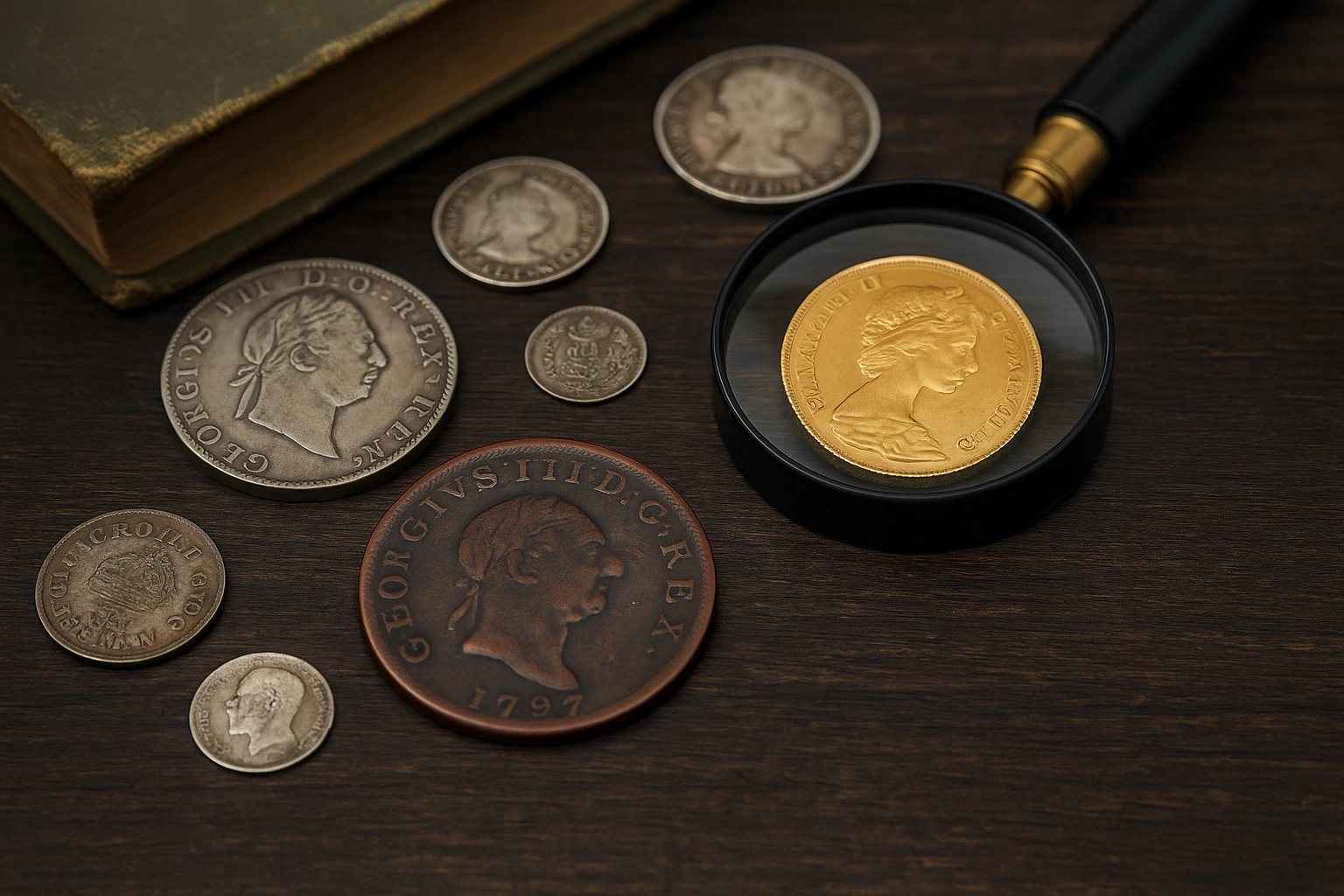
Old coins are more than just bits of metal; they’re tiny time capsules, minted snapshots of royal reigns, wars, currencies, and vanished empires. Whether you’ve inherited a box of mixed pennies or found a Victorian silver shilling at a car boot sale, the first question is always the same: what is it worth?
This post explains everything you need to know about valuing old coins in the UK, from identification to market trends, grading, and where to sell.
Why Value Old Coins?
Understanding how to accurately value old coins is essential whether you’re a seasoned collector, a casual enthusiast, or someone sorting through an inherited box of mixed currency. Coin values aren’t static; they’re shaped by rarity, condition, historical context, and demand so knowing what you have can make all the difference.
1. Avoid Underselling Rare Finds
Some of the UK’s most valuable coins don’t look like much to the untrained eye. For example:
- The 1933 George V penny, produced in extremely small quantities (possibly as few as six), is one of the rarest British coins ever made. One sold at auction in 2016 for over £72,000.
- Even modern coins can surprise: the 2008 undated 20p is a minting error that has sold for £50–£100, despite being just over a decade old.
Without proper knowledge, you might sell a rare piece for a fraction of its value, especially in bulk lots or by weight.
Resource: Change Checker Rare Coins Index – Tracks some of the most sought-after circulating coins in the UK.
2. Properly Insure Your Collection
If your coin collection includes rare, precious metal, or historically significant items, you’ll want insurance that reflects real value. Most standard home insurance won’t cover collectables above a certain threshold unless they’re itemised and independently valued.
- For collections over £1,000, consider a specialist collectables insurer, such as Assetsure or T H March, both of which offer UK-wide coin cover.
Tip: Keep an updated inventory with photographs, grades, and market estimates to support insurance claims or valuations.
3. Make Informed Purchases at Fairs or Auctions
Coin fairs and auctions are exciting places to build your collection but they can also be overwhelming if you don’t know what you’re looking at.
- Sellers at these events may price coins above retail for negotiation room.
- Knowing a coin’s realistic market value helps you spot a bargain or avoid being overcharged.
- For investment-grade coins, always ask for grading documentation or provenance.
Visit:
These events regularly list prices and sell catalogues online, which you can browse ahead of time to set expectations.
4. Spot Fakes or Reproductions
The coin market, especially online, is rife with counterfeits, fantasy issues, and poor reproductions. Many are convincing enough to deceive beginners.
Common UK fakes include:
- Gold sovereigns that are actually brass copies
- Victorian silver crowns with cast details (not struck)
- Ancient Roman coins that are entirely modern fabrications
Being able to identify red flags like inconsistent weight, poor detail, or unusual wear – helps prevent costly mistakes.
Use forums like Coin Community UK or subreddits like r/coins to post images and ask for advice on suspected fakes.
Remember: Not All That Glitters Is Gold
Even modest coins can hold unexpected value not just in money, but in history. From a Roman denarius found in a muddy field to a George VI half crown inherited from a grandparent, every old coin is a small piece of the past. Knowing its worth ensures it gets the respect and preservation it deserves.
1. Identify the Coin: Country, Reign, and Denomination
The first step in valuing old coins is correctly identifying what you have. This means understanding where and when it was minted, which monarch was reigning at the time, and what denomination the coin represents.
A correct identification can be the difference between a common penny and a valuable rarity.
Country of Origin
For UK collectors, coins often fall into one of these broad categories:
- British (England, Scotland, Great Britain, or United Kingdom)
- Commonwealth or Colonial – Coins from Canada, India, Australia, New Zealand, South Africa, and other British territories can also be of great interest, especially pre-independence issues.
- Irish or Channel Islands – The Irish Free State (1928–1937) and later Republic issues, as well as coins from Guernsey, Jersey, and the Isle of Man, are all collectible.
Example: A 1919 British India rupee bearing George V’s effigy is a sought-after colonial coin and may be silver depending on the mint.
Resource: Coins of the UK offers a useful breakdown by region and reign.
Monarch’s Portrait (The Obverse)
Most British coins feature the reigning monarch’s head on the front, which helps quickly narrow the timeframe.
Typical monarchs you’ll see:
- George III (1760–1820)
- Victoria (1837–1901)
- Edward VII (1901–1910)
- George V (1910–1936)
- George VI (1936–1952)
- Elizabeth II (1952–2022)
- Charles III (2022–present)
Each monarch typically went through multiple portrait changes during their reign. For example, Queen Victoria has the “Young Head,” “Jubilee Head,” and “Old Head” all of which can affect value.
To identify portraits, use visual guides such as those in the Spink Standard Catalogue of British Coins, widely available in libraries or online shops.
Date
The date of the coin is usually straightforward, but it’s not always the deciding factor in value.
While older coins may carry more historical weight, value is more often tied to rarity, such as:
- Low-mintage years
- Mint errors
- Special commemorative issues
Example: A 1949 half crown is rarer than some earlier years because of reduced production post-WWII.
Be aware of restrikes coins minted with old dates but produced much later. Some 1951 Festival of Britain crowns were struck in proof sets and are worth more than their circulating cousins.
Denomination
Knowing the face value or type of coin gives you a strong clue about its size, metal content, and collector demand.
Common UK denominations:
- Farthing – ¼ penny (ceased 1960)
- Penny and Halfpenny – Large copper or bronze coins
- Shilling – 12 pence; pre-decimal equivalent to 5p
- Florin – 2 shillings; precursor to today’s 10p
- Crown – 5 shillings; large ceremonial coin
- Sovereign – Gold coin; typically 7.98g
- Guinea – Older gold coin, pre-1816, worth 21 shillings
Tip: Weight, thickness, and edge inscriptions can also confirm denomination and authenticity. Some counterfeiters try to pass off common bronze coins as rarer gold versions with gold-coloured coatings.
Tools for Coin Identification
For DIY identification and research, these resources are invaluable:
- Spink’s Coins of England and the UK – The go-to printed reference for British coins by reign and type.
- Coins of the UK – Free online reference with images and details.
- Coin forums – Try r/coins and Coin Community UK to post pictures and ask for help.
Final Tip:
When identifying a coin, always record:
- Obverse and reverse descriptions
- Mint date
- Diameter and weight (use digital calipers and scales)
- Edge details (reeded, plain, lettered)
These small clues can help verify authenticity and track down variants worth more than their face value.
2. Assess Metal Content
The metal composition of a coin is a key factor in determining its intrinsic (or “scrap”) value, especially when dealing with gold or silver coins. But while precious metal value can offer a pricing floor, numismatic value (driven by rarity, demand, and condition) often goes far beyond the metal content alone.
Understanding what your coin is made from is essential for both valuation and safe handling.
Common Metals in British Coins
Copper & Bronze
Many 19th and early 20th-century coins were struck in copper or bronze alloys, including:
- Victorian pennies, halfpennies, and farthings
- Edward VII and George V large pennies
- Pre-decimal “bun head” and “old head” issues
These coins often have little to no scrap value but may hold collector value in high grades, low mintage years, or unusual errors.
Tip: Look for rich chocolate or reddish-brown patina on genuine older copper coins signs of age and authenticity.
Silver
British coinage featured sterling silver (92.5%) until 1919. From 1920 to 1946, the silver content was reduced to 50% due to rising metal costs post-WWI.
Typical silver coins include:
- Sixpences
- Shillings
- Florins
- Half crowns
- Crowns
Key dates to remember:
- Pre-1920 coins are sterling silver (higher scrap value)
- 1920–1946 coins are 50% silver
- Post-1947 coins contain no silver (cupronickel alloy instead)
Example: A 1914 half crown weighs 14.14g and contains 13g of sterling silver, currently worth over £7 in scrap value alone but it could fetch more from a collector depending on condition.
Gold
Gold coins such as sovereigns, half sovereigns, and guineas hold value far above face value.
- Gold Sovereigns: Contain 7.98g of 22-carat gold (≈91.67% purity)
- Half Sovereigns: Contain 3.99g of the same purity
- Guineas (pre-1816): Typically weigh around 8.4g
Due to their consistent weight and purity, sovereigns are popular among both investors and collectors.
Many modern counterfeit sovereigns exist, especially online, so checking weight and diameter precisely is essential. Always buy from trusted dealers or auction houses.
Check Metal Prices to Set a Base Value
To calculate a coin’s bullion value, multiply its metal content by the current market rate for that metal.
Live pricing available at:
Tip: Use digital jeweller’s scales to measure your coin’s weight. Even a small variation can mean the difference between genuine and fake, especially with sovereigns or silver crowns.
Numismatic vs Scrap Value
While metal content gives a helpful base price, collector interest often overrides bullion value. For example:
- A worn pre-1920 silver florin may only be worth £6 in scrap silver.
- A mint-condition or rare-date florin (e.g. 1905 Edward VII) might fetch £200–£300 at auction.
That’s why it’s important not to rush to sell silver or gold coins for melt value unless you’re certain they have no numismatic premium.
Rule of thumb: If a coin is pre-1947, check both scrap AND collector value before selling.
Final Word on Metal Content
Knowing the composition of your old coins helps you:
- Avoid being ripped off when buying or selling
- Safely clean or store different metals (e.g. silver tarnishes, gold is soft)
- Decide whether to melt, keep, or sell
But remember a coin’s story, rarity, and condition often outshine its weight in gold.
3. Understand Coin Grading
When it comes to valuing old coins, condition is often just as important if not more so than rarity. A common coin in pristine condition can sell for many times the value of a rarer example in poor shape.
Coin grading helps establish a coin’s condition using a consistent set of standards, allowing both collectors and dealers to compare value more accurately. But it takes practice and knowledge to get it right.
What Coin Grading Assesses
Grading a coin involves several factors:
Wear and Tear
Most coins that circulated will show some degree of wear. Look at:
- High points of the design (like a monarch’s cheek or hair)
- Legends and dates are they still sharp or worn smooth?
Lustre
Uncirculated coins have a natural mint lustre, a subtle shine caused by the flow of metal during striking. Once a coin is handled, this lustre fades.
Tip: Tilt the coin under a light source if it reflects in a cartwheel-like pattern, it may still retain its mint lustre.
Damage
Any of the following can drastically lower value:
- Scratches or nicks from poor storage
- Corrosion, especially on copper or bronze coins
- Improper cleaning (see below)
Strike Quality
A coin may be well-preserved but still poorly struck at the mint. This is particularly important for:
- Victorian bun head pennies
- Edward VII halfcrowns
- Certain commemorative issues
UK Coin Grading Scale (Simplified)
Most UK collectors and dealers use a grading system similar to the following:
Grade |
Description |
UNC (Uncirculated) |
No wear, full detail, original lustre – looks as if just struck |
EF (Extremely Fine) |
Very slight wear on the highest points, most detail intact |
VF (Very Fine) |
Moderate wear, all major design features still visible |
F (Fine) |
Heavy wear, some design detail worn but date and features still readable |
VG (Very Good) |
Major wear, faint details, little collector value unless rare |
Poor |
Nearly smooth, only identifiable by size/date – usually very low value |
Serious collectors may also use numeric grades (e.g., MS65, AU50) based on American systems like the Sheldon scale especially when submitting coins to professional grading services like PCGS or NGC.
Why Grading Matters
- Two coins of the same type and date can vary in value by hundreds of pounds depending on grade.
- Grading affects auction reserve prices and insurance valuations.
- Many serious collectors will only purchase coins above a certain grade threshold.
Example: A 1937 George VI crown in EF might sell for £30–£40, but an UNC version could go for £150+ due to its pristine condition and strong strike.
Do Not Clean Old Coins
One of the most damaging mistakes beginner collectors make is attempting to “clean” a coin to make it look better.
- Abrasive cleaning destroys surface detail and original mint lustre.
- Chemical dips or polishes leave unnatural shine or streaks.
- Even light rubbing with a cloth can cause micro-scratches that reduce grade.
Tip: Unless you’re a trained conservator, leave dirt, toning, or tarnish alone. Many collectors value coins with original surfaces even if they look dull or dirty.
If a coin is heavily encrusted or corroded and you’re unsure what to do, consult a reputable UK coin dealer or conservator first.
Helpful Resources for Grading UK Coins
- Spink’s Standard Catalogue of British Coins – Includes grading definitions and photos.
- British Numismatic Trade Association (BNTA) – Member dealers often offer guidance on grading and fair pricing.
- Forums like Coins Community and Coin People UK – Share photos to get peer reviews on condition.
Final Grading Tip
Grading can be subjective even among professionals. If you’re unsure:
- Compare your coin to graded images from reputable auction sites (e.g., Noonans, Warwick & Warwick)
- Get a second opinion from a BNTA-registered dealer or collector forum
- Keep any high-grade coins in airtight holders to preserve their condition
4. Check Rarity and Mintage Numbers
A coin’s value is often driven not just by age or condition, but by how rare it is. In numismatics, rarity can result from low mintage figures, minting errors, or limited-edition releases and it’s these factors that often spark collector demand and cause prices to rise.
Some of the most valuable UK coins are modern, thanks to production quirks or tiny print runs.
What Are Mintage Numbers?
Mintage numbers refer to how many coins of a particular type were officially struck and released into circulation. Lower numbers generally mean greater scarcity though popularity and historical interest also play key roles.
The Royal Mint occasionally publishes official mintage figures for UK coinage, which can be found in their annual reports and collecting hub.
Example: The Kew Gardens 50p (2009) had a mintage of just 210,000 making it the rarest 50p in circulation. In uncirculated condition, it can sell for over £150.
Notable Rare UK Coins to Know
Here are a few standout examples every UK collector should be aware of:
1. 1933 George V Penny
- Only six to seven were struck, mostly for ceremonial or archival purposes.
- One sold in 2016 for over £72,000 at auction.
- Often faked authentication is essential.
2. 1983 “New Pence” 2p Coin
- In 1983, 2p coins should have read “Two Pence.”
- A handful were mistakenly struck with the older “New Pence” reverse.
- These coins can sell for £500–£1,000+ depending on condition.
3. 2008 Undated 20p Coin
- A batch was accidentally minted without a date due to mismatched obverse/reverse dies.
- These coins are relatively recent but remain popular with collectors.
- Values typically range from £50 to £150, depending on grade.
4. 2015 Britannia £2 Coin with Mule Error
- Features the Britannia reverse but the wrong obverse portrait (used the older IRB Queen head instead of JC).
- A confirmed error only a small number released.
- Collectors pay a premium for these when authenticated.
Tip: Not all errors are valuable – some coins may just be damaged. Always verify with multiple sources before assuming you’ve found a rarity.
How to Check Rarity
Use these tools and resources to check if your coin is rare:
- Change Checker – Offers detailed rarity indexes for 50p, £1, and £2 coins in circulation. Updated regularly and very collector-friendly.
- The Royal Mint’s Collecting Hub – Offers mintage figures, coin stories, and new issue details.
- Numista – International coin database with user-submitted info, mintage numbers, and collector ratings.
- Coin Hunter – UK-specific site with a coin checker tool, collector values, and issue guides.
Beyond Mintage: Other Forms of Rarity
While low mintage is key, also look for:
Minting Errors
- Off-centre strikes
- Double strikes
- Die cracks or rotation errors
- Wrong planchet errors (coin struck on the wrong metal)
These are often more valuable than standard issues, even with high mintage, because of their novelty.
Short-Lived Designs
- Commemorative issues like the WWF 50p, Beatrix Potter series, or Shakespeare £2 coins may only be minted for one year, giving them long-term appeal.
Withdrawn or Recalled Coins
Coins removed from circulation (e.g. old £1 coins) can gain collector value if not melted down or if they feature unique designs.
Verifying a Rare Coin
If you think you’ve found something rare:
- Weigh it and measure it with digital tools
- Compare images and specs with known genuine examples
- Ask for help on forums like r/coins or the Coins of the UK forum
If the value seems significant, have it authenticated by a professional dealer or grading service (e.g. NGC or PCGS).
Thoughts on Rarity
Some of the most valuable coins in the UK have ordinary face values 1p, 2p, 20p but what sets them apart is rarity, error, or history. When valuing old coins, checking mintage and variation is just as critical as condition or metal content.
5. Use a Coin Valuation Service for Valuing Old Coins
Even with good reference guides and online research, there’s no substitute for getting a professional opinion especially when you’re dealing with potentially rare or high-value coins. A coin valuation service provides expert analysis of a coin’s condition, authenticity, metal content, historical significance, and market demand.
This is particularly useful if:
- You’re unsure about grading or rarity
- You suspect a coin may be a rare variety or error
- You’re planning to sell and want to set a realistic price
Trusted UK Coin Valuation Services
Coincraft (London)
- Based opposite the British Museum, Coincraft is one of the UK’s most established numismatic dealers.
- Offers free verbal valuations in-store and purchases coins outright.
- Does not conduct auctions, so valuations tend to be more balanced and realistic than speculative auction estimates.
DNW (Dix Noonan Webb)
- A leading London-based auctioneer specialising in coins, medals, and military antiques.
- Offers free pre-sale appraisals and access to a global network of collectors via their online and live auctions.
- Ideal for valuable items or full collections.
The British Numismatic Society
- An academic society dedicated to the study of coins and medals.
- While it does not offer direct valuation services, its journal, events, and members are a vital resource for understanding historic and ancient coinage.
- If you have Roman, medieval, or unusual coins, this is a strong reference point.
Antiques Atlas (Dealer Directory)
- Lists antique dealers across the UK, many of whom specialise in coins, tokens, and medals.
- Useful for finding local experts who can view your coins in person – often at fairs or in-store.
Local Antique Fairs & Coin Shows
Many reputable coin dealers attend monthly or quarterly antique and collectors fairs. These provide a casual, no-pressure environment to get opinions, ask questions, and even receive on-the-spot offers.
Notable UK fairs that regularly feature coin sellers:
- Newark International Antiques Fair
- Kempton Park Antiques Market
- London Coin Fair (Holiday Inn, Bloomsbury)
Check the Coin Fairs UK calendar for upcoming events near you.
How Valuations Typically Work
Valuation services may include:
- Verbal appraisals (free or low-cost)
- Written valuations (for insurance or probate, often charged by the hour or per coin)
- Auction estimates (provided by auction houses if you’re selling)
Tip: If a dealer offers to buy your coin immediately after a valuation, don’t feel pressured to sell. Always get at least two opinions – especially if you haven’t established market value yet.
Before You Go for a Valuation: Prepare Your Coins
- Do not clean or polish them beforehand (see Section 3)
- Bring original packaging or provenance, if any
- Group coins by type, monarch, or metal to help streamline the process
- Photograph coins beforehand in case they are handled out of sight during valuation
Professional Grading Services (For High-Value Coins)
If you believe a coin is exceptionally valuable or investment-grade, you may wish to get it professionally graded and slabbed by:
- NGC UK (Numismatic Guaranty Company)
- PCGS Europe (Professional Coin Grading Service)
These services provide:
- Authentication
- Grading on a numeric scale
- Tamper-proof packaging
- Worldwide collector trust
However, these services are often more expensive and best reserved for coins worth £100+ each or being sold internationally.
6. Compare with Current Market Prices to Value Old Coins
Once you’ve identified a coin, assessed its condition, and considered its rarity, the next step in valuing old coins is checking what it’s actually selling for today. This is essential whether you’re looking to sell, insure, or simply understand your collection’s worth.
But there’s a crucial distinction here: the asking price (what someone hopes to get) is often far higher than the realised price (what buyers are actually paying).
Where to Check Real Market Values
eBay UK – Sold Listings
eBay remains one of the largest secondary markets for old coins in the UK. To get realistic valuations:
- Search your coin by name, year, and denomination (e.g. “1914 George V penny”).
- In filters, scroll down and check “Sold items” under “Show only”.
- Study multiple listings to assess trends based on condition.
Tip: Ignore outliers one-off sales at extremely high prices may be anomalies or manipulated. Focus on consistent averages.
Go to eBay UK
London Coins Auctions
One of the UK’s premier coin auction houses. They publish detailed catalogues with full descriptions and archived sale prices going back years.
- Coins are professionally described and graded.
- Results show what collectors are actually paying not just estimates.
Warwick & Warwick
This specialist auctioneer runs regular sales for coins, stamps, and militaria. You can browse past auction catalogues and see achieved prices.
- Particularly good for bulk lots, Victorian coins, and pre-decimal sets.
- Their team includes BNTA members with decades of experience.
Visit Warwick & Warwick
DNW (Dix Noonan Webb)
Another major UK auctioneer of coins and medals. Their past sale archive is well indexed and includes high-quality images, which are great for comparing condition and grading.
Be Cautious of Asking Prices
Online listings especially on eBay, Etsy, or private collector forums often feature coins priced well above market value. These “buy it now” or “private collection” prices:
- Reflect seller hope, not buyer demand.
- Can stay unsold for months.
- Often ignore condition or historical context.
Tip: Always cross-check prices using multiple sold sources, and beware of sellers using words like “RARE” or “MUST HAVE” without evidence of low mintage or demand.
Common Pitfall: Assuming Age Equals Value
Just because a coin is old (e.g. Georgian or Victorian) doesn’t guarantee it’s valuable. High-mintage pennies from the 1800s, for example, often fetch just a few pounds unless they’re in top-grade or are rare variants.
Market Trends and Timing
Coin values rise and fall based on:
- Collector demand
- Gold and silver prices (especially for sovereigns and crowns)
- Historical anniversaries or media coverage
For example, WWI-related coins gained popularity around the centenary years (2014–2018), and certain Queen Elizabeth II memorial coins surged after her passing.
7. Selling Old Coins in the UK
Once you’ve identified, valued, and researched your old coins, the final step for many collectors is selling. Whether you’re parting with inherited coins, downsizing a collection, or trading duplicates, choosing the right sales channel can make a big difference in both profit and protection.
Private Sale Options
eBay UK
- The most popular online platform for casual and serious sellers.
- Huge audience and advanced filters for denomination, date, and grade.
- Fees apply (around 12.8% final value + listing fees).
- Photos and accurate descriptions are essential to build buyer trust.
Tip: Use sold listings (see previous section) to set a realistic price. Include close-up images of both sides of each coin and any certificates or packaging.
Facebook Marketplace & Collector Groups
- Good for local buyers and low-risk items.
- Niche groups like “UK Coin Collectors & Dealers” often attract knowledgeable buyers.
- No fees, but beware of scams and timewasters.
Try searching for:
- “UK Coin Collectors Buy/Sell/Trade”
- “British Coins Group”
Tip: Meet in person in public places or use a trusted payment service like PayPal Goods & Services if posting items.
Gumtree & Preloved
- Localised platforms ideal for quick, no-fee sales.
- Less exposure than eBay but fewer costs.
- Attracts casual collectors or hobbyists.
Sell on Gumtree
Sell on Preloved
Coin Dealers & Auction Houses
For high-value, rare, or specialist items, working with a reputable dealer or auctioneer is often safer and more profitable.
Coincraft (London)
- Based in Bloomsbury, opposite the British Museum.
- Offers free verbal valuations and purchases coins directly.
- Focuses on British, world, and ancient coins.
Visit Coincraft
DNW (Dix Noonan Webb, London)
- Leading auction house for coins, medals, and militaria.
- Provides free pre-sale appraisals and access to international buyers via online auctions.
- Specialises in high-grade, historic and investment coins.
Visit DNW
Lockdales (Suffolk)
- Regional auctioneers known for coins, militaria and collectables.
- Offers valuation days across the UK.
- Ideal for inherited collections or mixed lots.
Auction Tip: Most houses charge sellers a commission (typically 10–20%) but offer free marketing and authentication. Ask about seller fees, reserve pricing, and insurance before consigning.
Coin Fairs: Sell Directly to Dealers and Collectors
Fairs are a great way to meet trusted dealers, network with collectors, and receive on-the-spot offers. They can be ideal for selling mid-value coins without auction wait times.
Top UK Coin Fairs:
- London Coin Fair Held quarterly at the Holiday Inn Bloomsbury. Features major UK dealers. View upcoming dates
- Midland Coin Fair Held monthly in Birmingham. One of the UK’s largest one-day coin events.More info
- Wakefield, York & South of England Coin Fairs Smaller regional fairs with strong collector attendance.
Tip: Bring coins in organised trays or protective holders. Avoid mixing valuable coins into job lots unless fully appraised first.
Tips Before You Sell
- Get multiple valuations: Prices can vary dramatically between dealers.
- Never rush into selling rare coins. Do your research and consider auctions or timed sales to create competitive bidding.
- Avoid selling coins by weight or in bulk unless you’re absolutely sure they’re all low-value.
- Photograph everything: Keep records for insurance and reference.
Where and how you sell old coins depends on the type of coin, its condition, and your confidence as a seller. While eBay may work for common issues or duplicates, auctions and dealers are best for anything rare, historic, or high-grade.
Taking the time to prepare, value, and research your options will help you avoid regrets and get the best return for your collection.
8. Store and Preserve Your Coins Properly
Even the most valuable coin can lose its worth if it’s not properly stored. Preservation is just as critical as valuation especially for copper, silver, and uncirculated coins where condition plays a huge role in determining price.
Here’s how to store and protect your old coins to maintain or even enhance their value over time.
The Golden Rules of Coin Storage
Use Archival-Grade Materials
Coins should be stored in holders or containers that are:
- Acid-free
- Chemically inert
- Non-PVC
Ideal options include:
- 2×2 Mylar coin flips (with cardboard backing)
- Hard plastic capsules (airtight and display-friendly)
- Archival coin albums (for sorting by monarch, denomination, or date)
Avoid common household containers like:
- Cigarette tins (can trap moisture)
- Plastic wallets or ziplock bags (may off-gas)
- Rubber bands (can stain and corrode metal)
Maintain a Stable, Dry Environment
- Keep your collection in a dry place, ideally with consistent temperature and low humidity.
- Store away from radiators, windows, or damp cellars.
- Use silica gel packs in storage drawers or safes to absorb moisture.
Warning: Humidity and condensation are particularly damaging to silver coins tarnish, pitting, or corrosion can form quickly if left unchecked.
Handle with Care
- Always wash and dry your hands before handling coins, or better yet, wear soft cotton or nitrile gloves.
- Hold coins by the edges, never the face fingerprints can cause long-term damage, especially on proof or uncirculated surfaces.
Tip: If you drop a coin while handling, do not try to catch it mid-air. Let it fall – attempting to grab it may scratch the surface.
Label and Organise Your Collection
- Use small inserts in flips or albums to note key info: date, denomination, monarch, condition, mintage, or value.
- Create a digital log or spreadsheet with photos, purchase price, and notes – useful for insurance, estate planning, or resale.
Recommended UK Coin Storage Suppliers
The Westminster Collection
- Offers coin presentation cases, capsules, albums, and full collector kits.
- Good for beginners and gift sets as well as serious collectors.
Harrison’s Coin Accessories
- Specialist coin supply retailer offering 2×2 flips, albums, trays, gloves, and silica gel.
- One of the best all-round UK suppliers for preservation-grade materials.
Visit Harrison’s
Lighthouse UK (Leuchtturm)
- German brand with a strong UK presence, known for professional-grade albums, capsules, and storage boxes.
- Ideal for larger or high-value collections.
Final Thoughts on Valuing Old Coins – Knowledge is the Value
When it comes to valuing old coins, your sharpest asset isn’t a magnifying glass – it’s knowledge.
From spotting rare mint errors to understanding subtle grading differences, the more you know, the better equipped you’ll be to:
- Avoid costly mistakes
- Recognise genuine rarities
- Negotiate fair prices
- Preserve long-term value
Whether you’re a lifelong numismatist or simply sorting through a family inheritance, treating your coins with informed care could reveal more than historical interest it could uncover unexpected financial value.
Stay Curious, Stay Connected
Coin values change with market trends, metal prices, and collector demand. Stay current by:
- Reading trusted UK resources like Change Checker and the Royal Mint’s Collecting Hub
- Joining Facebook groups, coin forums, and attending fairs to learn from fellow collectors
- Investing in a good coin guide like Spink’s Coins of England & the UK
You May Be Holding More Than History
An unassuming old coin could be far more than pocket change it might be a piece of heritage, an overlooked investment, or the missing link in another collector’s story.
Take the time to research, compare, and document your coins. You’ll not only protect their value you’ll enhance your own as a knowledgeable collector.
Leave a Reply