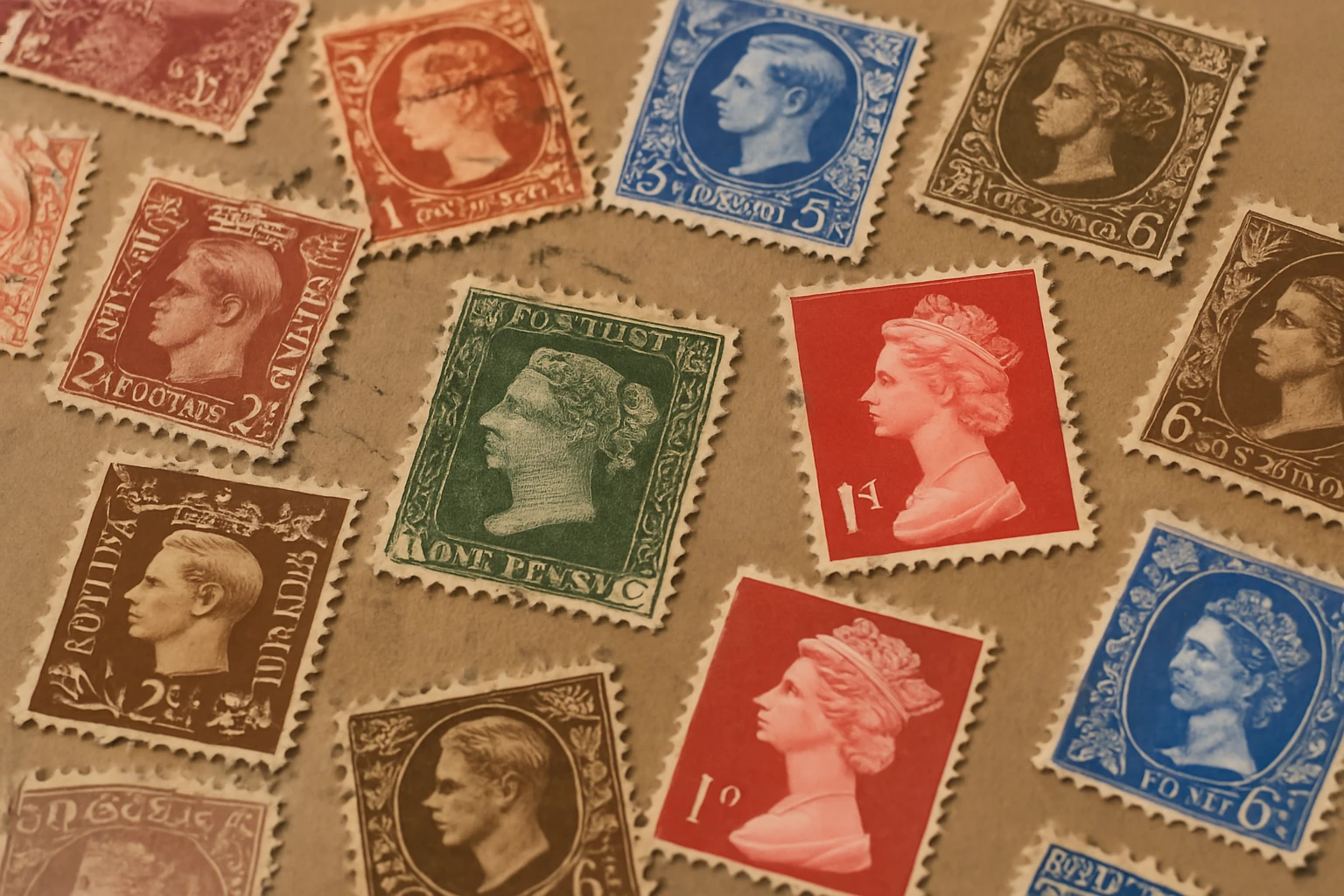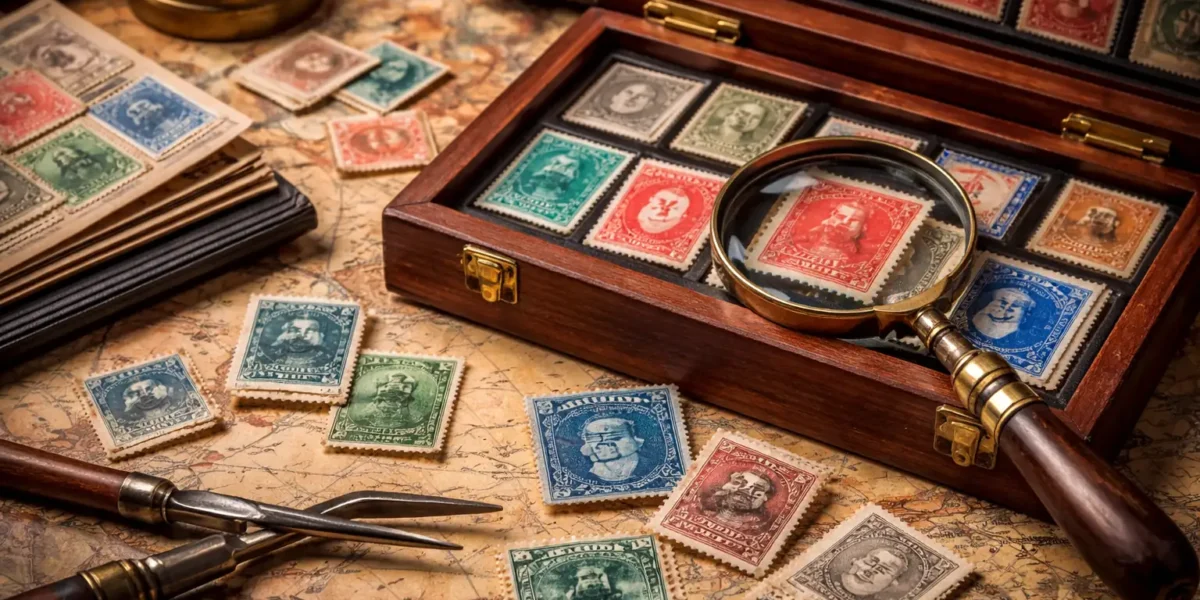
Whether you are searching for a Victorian penny value to complete a collection or hunting for a genuinely rare British stamp error, knowing where to buy rare stamps UK dealers and auctioneers offer is the difference between building a strong collection and wasting money on overpriced or misidentified material.
Quick Summary
- The UK has the world’s most developed infrastructure for buying rare stamps, led by Stanley Gibbons, Spink, and Grosvenor Philatelics
- Stampex (held twice yearly in London) is the most important regular event for UK stamp buyers
- Expert certificates from the RPSL or BPA are essential protection when buying high-value material
- eBay and Delcampe are useful for accessible material but require more buyer vigilance
- PTS (Philatelic Traders’ Society) membership is the key quality signal for UK dealers
Overview of the UK Rare Stamp Market
The United Kingdom is the birthplace of the postage stamp and, appropriately, home to the most developed and internationally respected infrastructure for buying and selling rare stamps in the world. The combination of the world’s oldest philatelic society (the Royal Philatelic Society London, founded 1869), the world’s leading philatelic dealer and catalogue publisher (Stanley Gibbons, founded 1856), and a dense network of specialist dealers, auction houses, and collector societies makes the UK the global centre of philatelic commerce.
For collectors seeking rare British stamps – Victorian issues, Channel Islands occupation material, major errors, or specialist machins – buying within the UK market has significant advantages: the specialist expertise is concentrated here, the auction houses are world-class, and the collector community is deep and knowledgeable enough to validate authentic material and identify forgeries.
The rare stamp market in the UK operates across several interconnected channels, each with different characteristics, price levels, and buyer requirements. Understanding these channels and choosing the appropriate one for any given purchase is the foundation of efficient, safe buying.
Specialist Philatelic Dealers
Specialist dealers represent the safest and most service-oriented route to buying rare stamps, particularly for collectors who are relatively new to a specific area or who lack the expertise to confidently assess complex material independently.
Stanley Gibbons
Stanley Gibbons, headquartered on The Strand in London, is the world’s most famous philatelic dealer and the publisher of the Stanley Gibbons catalogues that serve as the global standard reference for British and Commonwealth stamps. Their retail operation offers an extensive range of British rarities across all periods, supported by catalogues, a refund guarantee on items found not to be genuine, and specialist expertise across all areas of British philately. For collectors seeking quality assurance above all else, Stanley Gibbons is the benchmark.
Philatelic Traders’ Society (PTS) Members
The Philatelic Traders’ Society (PTS) is the trade association for professional philatelic dealers in the UK, with membership restricted to those meeting specific professional standards and operating under a defined code of conduct. PTS members are accountable to the society for disputes and misrepresentation, providing buyers with recourse that is unavailable when dealing with non-member sellers. When buying rare stamps from any dealer – online or in person – checking for PTS membership is the most straightforward quality assurance available.
PTS member dealers include specialists in virtually every area of philatelic collecting. The PTS website maintains a searchable directory of members with their areas of specialism, allowing collectors to identify the most relevant expert for their particular collecting focus.
Visiting Dealers in Person
For significant purchases, visiting dealers in person has important advantages: you can examine material under magnification, compare multiple examples side by side, ask detailed questions about condition and provenance, and build the relationship that long-term collecting benefits from. Many specialist dealers in London’s Strand area (near the Stanley Gibbons shop) and in provincial cities maintain appointments-based operations that welcome serious buyers by arrangement.
Philatelic Auction Houses
Specialist philatelic auction houses offer the most competitive buying environment for rare stamps – prices are set by open bidding competition rather than a dealer’s asking price, which can benefit buyers when interest in a specific lot is limited. However, auction buying requires more knowledge and vigilance than dealer buying, as auction house guarantees are typically more limited and buyer’s premium adds significantly to the hammer price.
Spink & Son
Spink & Son, founded in London in 1666, is one of the oldest and most respected auction houses in the world for philatelic material. Spink’s specialist stamp auctions in London attract international bidders and regularly include major British rarities including Victorian high values, classic errors, and significant collections. Their auction catalogues – available as detailed printed and online publications – include comprehensive descriptions, condition reports, and estimated values that are themselves useful reference tools regardless of whether you intend to bid.
Grosvenor Philatelics
Grosvenor Philatelics is a London-based specialist auction house dedicated exclusively to philately, making it particularly focused on stamp collecting rather than the broader auction house model. Their regular London auctions attract specialist collectors and achieve strong prices for quality material. Grosvenor is particularly noted for its British and Commonwealth material and its careful expertising of lots before inclusion in sales.
SG Auctions (Stanley Gibbons)
Stanley Gibbons also operates a specialist auction division – SG Auctions – that conducts regular online and room auctions of British and Commonwealth material. The combination of the Stanley Gibbons name and catalogue expertise provides a level of authentication confidence that many competing auction platforms cannot match.
Understanding Auction Fees
When budgeting for auction purchases, always calculate the total cost including buyer’s premium. UK philatelic auction houses typically charge buyers a premium of 15–22% on the hammer price, plus VAT on the premium. A stamp that hammers at £500 will cost approximately £600–£625 in total (at 20% buyer’s premium plus 20% VAT on the premium). This total cost must be factored into your maximum bidding strategy.
Stampex and Philatelic Fairs
Stampex – the national stamp exhibition held twice yearly in London – is the single most important regular event in the UK philatelic calendar and is strongly recommended for any collector seriously pursuing rare British stamps.
Organised by the Association of British Philatelic Societies and typically held at the Business Design Centre in Islington, Stampex brings together hundreds of dealers (including many PTS members from across the UK), specialist auction houses offering viewing of forthcoming sales, philatelic societies from across Britain and internationally, and expertising services. The exhibition floor is effectively a concentrated representation of everything the UK philatelic market has to offer, accessible in a single visit.
For buyers, the advantages of Stampex are significant:
- Comparative shopping: You can examine material from multiple dealers side by side and compare prices for similar items without the geographical effort of visiting dealers separately.
- Expert access: Specialists in every philatelic area attend, and the informal conversations that develop around shared interests often yield insights and connections that buying from catalogues alone cannot replicate.
- New material: Many dealers bring new stock specifically for Stampex, and early attendance on the first day captures the best selection.
- Expertising: Services for the examination and certification of stamps are sometimes available at the exhibition.
The spring and autumn editions of Stampex are typically held in February/March and September/October respectively. Check the Association of British Philatelic Societies (ABPS) website for confirmed dates and venue information.
Online Platforms for Buying Rare Stamps
Online platforms have transformed access to philatelic material, providing collectors in any location with access to material from sellers worldwide. However, online buying of rare stamps carries specific risks that require informed management.
eBay UK
eBay remains the largest single marketplace for stamps in the UK by volume of transactions. The platform is useful for common and moderately priced material, and for finding affordable examples for study, comparison, and completing standard collections. For rare, high-value, or complex material, the risk profile is higher: condition misrepresentation, misidentification of varieties, and forgeries are more prevalent on general platforms than through specialist dealers and auction houses.
Best practice for eBay stamp buying: check seller feedback specifically for stamp transactions (not general selling feedback); ask for additional photographs if the listing is inadequately illustrated; ask explicit questions about condition, certificates, and any known faults; and pay using PayPal’s buyer protection or a credit card to preserve recourse in case of dispute.
Delcampe
Delcampe is a European specialist platform for philatelic material with a large international seller and buyer base. The platform hosts both auction and fixed-price listings from professional dealers and private collectors. Delcampe’s specialist focus means the seller community is generally more knowledgeable about their material than on general platforms, and the feedback system is specifically calibrated for the philatelic market.
Catawiki
Catawiki’s philatelic auctions are run by category specialists who curate lots and provide expert descriptions. This curatorial layer adds a degree of quality assurance not present on eBay. Catawiki attracts an international buyer base across Western Europe and beyond, which can drive competitive bidding for strong material.
Stanley Gibbons Online
The Stanley Gibbons online shop and database provide access to a wide range of graded and certified British material, with the confidence of buying from the world’s most authoritative philatelic source. While prices reflect the Stanley Gibbons premium for quality assurance, for rare or high-value material the authentication guarantee is often worth the cost.
Regional Dealers and Philatelic Societies
Beyond the major London-centred dealers and auction houses, the UK has a substantial network of regional philatelic dealers and local philatelic societies that offer valuable buying opportunities.
Regional philatelic societies – most towns of any significant size have one – hold regular meetings, exhibitions, and auction sessions that provide access to material sold by fellow collectors at prices often below dealer levels. The atmosphere is typically collegiate and educational, making them excellent environments for newer collectors to develop knowledge alongside buying opportunities. The ABPS website provides a directory of affiliated societies.
Regional dealers often specialise in specific areas of philately or in the stamps of particular countries or periods. Building a relationship with a dealer who specialises in your area of focus provides consistent access to material that would not otherwise come to your attention, and the trust built over multiple transactions is itself a valuable collecting asset.
Buying Collections and Accumulations
One of the most interesting buying opportunities for experienced philatelists is the purchase of entire collections or accumulations from estates, collectors moving on, or dealers liquidating older stock. These can offer genuine value when the buyer has sufficient knowledge to identify the best material within a larger lot.
Estate collections frequently contain material that has not been reviewed since it was assembled decades earlier – stamps that may now be worth significantly more than they were when the collection was put together, or varieties that were not identified as significant at the time of acquisition. For collectors with strong knowledge of their specialist area, buying collections at auction or from dealers can yield individual pieces at fractions of their individual retail value.
The risk is proportional to the proportion of the collection that is worthless or very low-value material – accumulations containing many thousands of common stamps and a handful of better items require careful valuation before purchase. If possible, examine a collection in person or via detailed photographs before bidding, and establish your best-case and realistic-case estimates for the value of the contained material.
Certificates and Authentication
For rare, valuable, or potentially contentious stamps, an expert certificate from a recognised authority is the most important single piece of documentation a buyer can obtain. In the UK, the two most significant expertising services are:
- Royal Philatelic Society London (RPSL) Expertising Service: The RPSL issues certificates that represent the definitive authentication for British and Commonwealth philately. An RPSL certificate stating that a stamp is genuine, in the condition described, and correctly identified carries substantial weight at auction and in private sales.
- British Philatelic Association (BPA) Expertising Service: The BPA also provides authentication services with a strong reputation in the philatelic community.
When buying significant material without a certificate, the cost of obtaining certification should be factored into the purchase price. If a seller is reluctant to have material certified, or if they ask a premium price for uncertified rare material, this is a red flag warranting significant caution.
Avoiding Forgeries and Misrepresentation
Forgery and misrepresentation are the most significant risks in buying rare stamps. British philately has a long history of sophisticated forgeries – from the nineteenth-century Sperati forgeries to modern reproductions of rare Victorian errors – that have deceived knowledgeable collectors and dealers. The most effective protections are:
- Buy certificated material: RPSL or BPA certificates are the most reliable protection for high-value purchases.
- Buy from PTS member dealers: Professional accountability to the society provides recourse unavailable with private sellers.
- Develop specialist knowledge: Familiarity with genuine examples of the material you collect is the most durable long-term protection.
- Be sceptical of below-market pricing: Rare stamps offered at prices significantly below market are almost always misidentified, heavily faulted, or forgeries.
- Examine under magnification and UV light: Many repairs, regumming, and colour changelings are only detectable under magnification or ultraviolet examination.
Negotiating and Buying Strategy
In the philatelic dealer market, prices are not always fixed, and polite negotiation – particularly for multiple purchases, significant lots, or material that has been in stock for some time – is entirely standard practice. Build relationships with dealers over time; regular buyers often receive early notification of new stock, discretionary discounts, and access to material before it is publicly listed.
At auction, establish your maximum bid before the sale begins and adhere to it. The excitement of the auction room (or the psychological momentum of online bidding) can lead to irrational escalation above a piece’s true value. If you miss a lot at auction, note the hammer price and use it to refine your understanding of market value for that category – it is usually a better outcome than winning at an overpay.
Comparing Prices Across Sources
The Stanley Gibbons catalogue provides list prices that serve as a useful reference point, but catalogue values should not be taken as market prices – they typically represent the higher end of dealer asking prices rather than what stamps actually achieve in competitive auction or between informed collectors. For genuine market price intelligence:
- Check completed auctions at Spink, Grosvenor, and SG Auctions for recent hammer prices on comparable material.
- Monitor Delcampe and eBay “sold” listings for accessible material price confirmation.
- Ask specialist dealers for a realistic selling price rather than a catalogue price when assessing value.
- Attend Stampex and observe what dealers are actually asking (and accepting) for specific material.
Useful UK Resources
- Stanley Gibbons – world’s leading philatelic dealer and catalogue publisher; retail and auction services.
- Spink & Son – major specialist philatelic auction house in London.
- Royal Philatelic Society London – world’s oldest philatelic society; expertising and authentication services.
- Philatelic Traders’ Society (PTS) – member directory of professional UK stamp dealers operating under a code of conduct.
- Association of British Philatelic Societies (ABPS) – Stampex organiser; directory of UK philatelic clubs and societies.
FAQs
- What is the best place to buy rare stamps in the UK?
- The best source depends on your budget and experience level. For assured authenticity and expert guidance, specialist dealers such as Stanley Gibbons and PTS members offer the highest confidence. For competition-based pricing, specialist philatelic auction houses including Spink, Grosvenor Philatelics, and SG Auctions are excellent. Online platforms including eBay, Delcampe, and Catawiki provide accessibility but require more buyer knowledge.
- Are specialist philatelic dealers worth using when buying rare stamps?
- Yes, for rare, high-value, or complex stamps, specialist dealers offer significant advantages. PTS members operate under a code of conduct and are accountable for disputes. Good dealers will provide certificates of authenticity, disclose any faults, and stand behind their descriptions. The premium you pay reflects authentication, expertise, and service.
- Is it safe to buy rare stamps on eBay?
- eBay is safe for common and moderately priced stamps from experienced sellers with strong feedback records. For genuinely rare or high-value material, the risk of forgeries, misidentified varieties, and condition misrepresentation is higher. Check seller feedback carefully, request additional photographs, and ask explicit questions about known faults before bidding on rare material.
- What is Stampex and is it worth attending?
- Stampex is the UK’s national stamp exhibition, held twice yearly in London. It brings together hundreds of dealers, auction houses, and philatelic societies, providing an unparalleled opportunity to examine material in person, compare prices, and meet specialists in your collecting area. Entry is free or very low cost and it is strongly recommended for all UK stamp collectors.
- How do I avoid buying forged stamps?
- Buy certificated material accompanied by an RPSL or BPA expert certificate. Buy from PTS member dealers and reputable auction houses. Develop your knowledge of the specific varieties you collect – familiarity with genuine examples is the best long-term defence. Be sceptical of below-market pricing, which almost always indicates a problem.
Glossary
- Expert certificate – a written authentication from a recognised philatelic expertising service (RPSL, BPA) confirming a stamp’s genuineness, correct identification, and described condition.
- PTS – Philatelic Traders’ Society; the UK trade association for professional stamp dealers. PTS membership indicates adherence to a professional code of conduct.
- Buyer’s premium – the percentage charge added to the hammer price at auction, paid by the buyer. Typically 15–22% at UK philatelic auction houses.
- Hammer price – the final bid price at which a lot is sold at auction, before buyer’s premium is added.
- Accumulation – a large, unsorted or partially sorted collection of stamps, typically purchased as a lot and examined by the buyer for valuable items.
- Forgery – a stamp produced to deceive collectors or postal authorities. Sophisticated forgeries of rare stamps have a long history in philately and expert certification is the primary defence.