
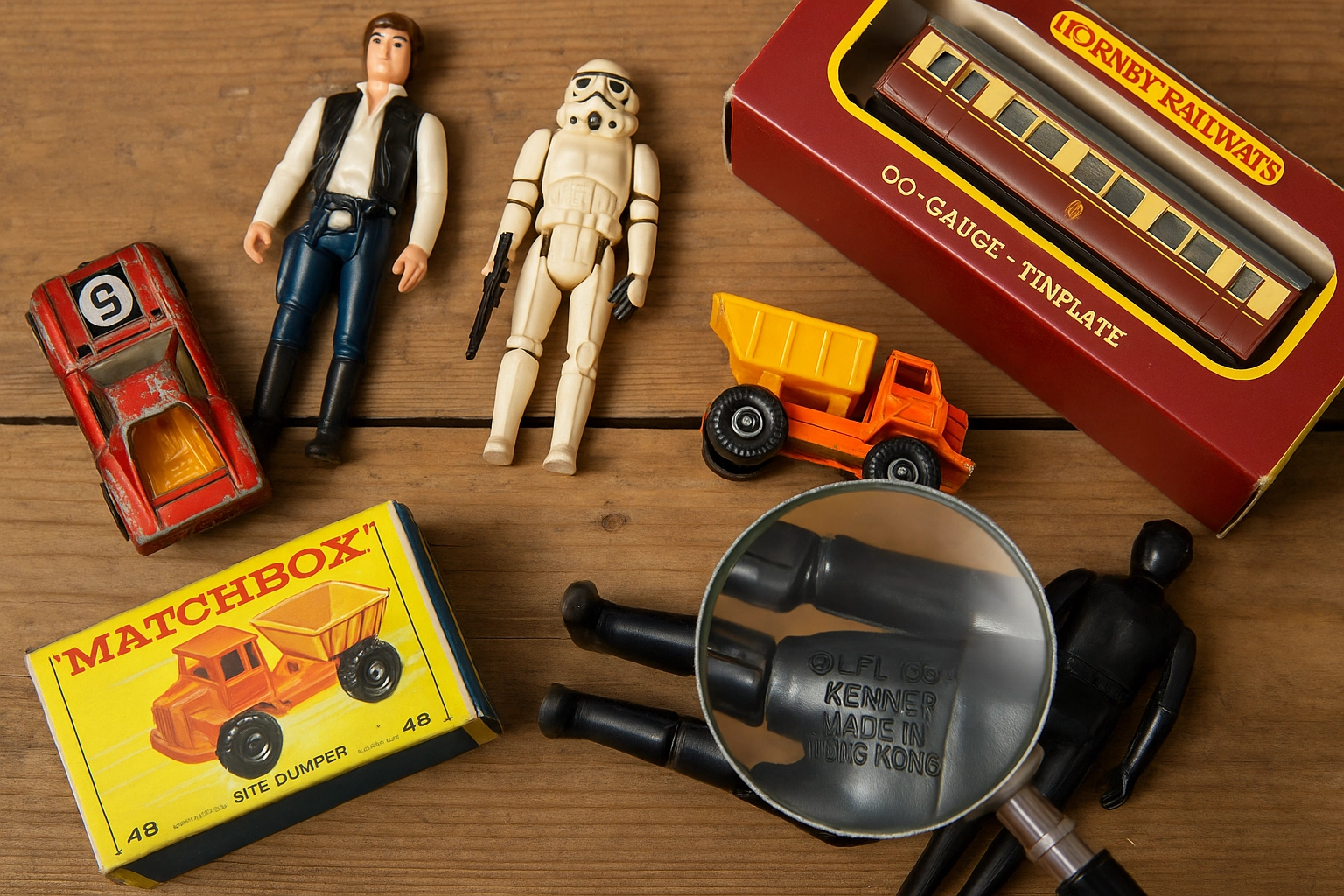
The vintage toy market in the UK is thriving, with collectors seeking everything from 1970s Star Wars figures to 1980s Transformers and classic Corgi cars. But with popularity comes imitation. Whether you’re a seasoned collector or just starting out, knowing how to authenticate vintage toys is essential. This guide covers how to authenticate vintage toys in the UK, from spotting repros to using online resources and expert help.
Why Authentication Matters
In the world of vintage toy collecting, authentication is everything. Whether you’re a passionate hobbyist or a seasoned investor, verifying the legitimacy of your vintage toys ensures you’re building a collection of genuine value not just sentimental worth.
Here’s why authentication is essential:
Preserving Resale Value
Only authentic vintage toys hold strong long-term value in the UK collector’s market. Original items from brands like Palitoy, Hornby, Matchbox, or Kenner can fetch hundreds or even thousands of pounds but only if they’re proven genuine. Reproductions or “customs” significantly reduce an item’s market appeal, no matter how convincing they look.
Avoiding Costly Fakes
Today’s counterfeiters are sophisticated. From 3D-printed accessories to artificially aged packaging, many fakes can fool even experienced collectors. Authenticating your toys protects you from overpaying or unknowingly buying fraudulent items especially common in popular UK lines like Action Man, Star Wars (Palitoy), and Dinky Toys.
Crucial for Insurance & Valuation
If you plan to insure your collection (as many serious collectors do), provenance and authenticity are critical. Insurers may require certificates of authenticity or verifiable purchase records to offer proper cover. Without it, any damage or loss claim could be significantly undervalued or even denied.
The UK Landscape: A Double-Edged Sword
With the growth of online marketplaces like eBay UK, Gumtree, and Facebook Marketplace, vintage toys are more accessible than ever, but this convenience comes at a price. Scammers thrive on these platforms, selling fake or altered items to unsuspecting buyers.
Platforms such as Vinted and Depop are also growing in popularity for toy trading, but again, these typically offer little buyer protection unless you know exactly what to look for.
Did You Know? Some UK sellers list reproduction toys without clearly marking them as such. Always read item descriptions closely and never hesitate to ask for detailed photos or origin history before you buy.
1. Check for Manufacturer Marks and Dates
One of the first and most reliable steps when your looking to Authenticate Vintage Toys is to examine it for original manufacturer marks, dates, and country of origin. These small details can reveal a great deal about a toy’s authenticity and historical accuracy.
What to Look For:
- Brand stamps and logos: Genuine toys often carry moulded or printed logos from manufacturers such as:
- Palitoy (UK distributor for Star Wars, Action Force)
- Kenner (US-based, but some UK-imported versions exist)
- Matchbox and Corgi (UK-based die-cast legends)
- Hornby (model trains and accessories)
- Airfix, Britains Ltd, and Lesney Products (producer of early Matchbox cars)
- Palitoy (UK distributor for Star Wars, Action Force)
- Copyright or mould dates: Often engraved discreetly on the toy’s underside, foot, or back. For example, “©1977 LFL” on a Palitoy Star Wars figure refers to Lucasfilm Ltd and is a marker of vintage production.
- Country of manufacture: Early toys were commonly marked “Made in Hong Kong,” “Made in Great Britain,” or “Made in Japan.” Toys marked “China” or “Vietnam” are often modern reproductions or reissues.
Expert Tip: Use a magnifying glass or jeweller’s loupe to inspect fine details – especially on small figures or accessories.
2. Assess Paint and Material Quality
A close look at the materials and finishes used on a toy can reveal far more than its surface appearance. In fact, paintwork and plastic composition are often among the clearest signs of a toy’s age and authenticity.
Paint Clues from the Past
Many vintage toys particularly pre-1980s were painted with lead-based or enamel paints that aged in unique ways. Look for:
- Flaking, dulling, or yellowing of paint due to decades of oxidation.
- Subtle fading, especially on toys displayed in sunlight or stored improperly.
- Small chips or scuff marks that align with natural wear, not forced damage.
Modern reproductions often use acrylic or synthetic paints, which can appear glossy, overly vibrant, or too uniform, even when artificially aged.
Material Matters
The type of material used in a toy is often a direct indicator of its production era:
- Bakelite, celluloid, or hard rubber were common pre-1950s.
- ABS plastic became popular in the 1970s and has a more matte, brittle finish.
- Toys made from PVC (e.g. flexible Star Wars figures) often become sticky or discoloured with age.
Test the plastic feel: Older plastics tend to feel more rigid or chalky, while modern fakes are often smooth and flexible.
Caution: “Too Perfect” Can Be a Red Flag
Be especially suspicious of:
- Figures or vehicles with mint-condition paint but no packaging provenance.
- Chrome finishes or die-cast bodies without even minor scratches or pitting.
- Sellers offering multiple “pristine” examples of the same toy at below-market prices.
As a general rule: If it looks too new for a 40-year-old toy, it probably isn’t the real thing.
Useful UK Resources for Materials Verification
- Collecting Corgi Toys – Excellent reference for assessing paint, wheels, and casting wear.
- Matchbox Memories (UK) – Guides to identifying wear and repros in early Matchbox models.
- TVTA – The Vintage Toy Advertiser – Compare authentic toy materials and manufacturing techniques across decades.
3. Compare to Original Packaging
When it comes to Authenticate Vintage Toys in the UK, original packaging can be just as revealing as the toy itself and sometimes even more so. Boxes, backing cards, and blister packs offer vital clues that help authenticate vintage toys with confidence.
What to Look For in Genuine UK Packaging
- UK-specific branding:
Many vintage toy lines released in Britain used different distributors and packaging than their US counterparts. A perfect example is Palitoy, which handled Star Wars and Action Force in the UK under licence from Kenner. Authentic UK packaging may show:- “Palitoy” or “Made in Coalville, Leicestershire”
- English spellings and British legal text (e.g. “CE” marks or toy safety warnings)
- “Palitoy” or “Made in Coalville, Leicestershire”
- Vintage retail stickers:
Price labels from now-defunct British retailers add an unexpected but useful layer of authenticity. Keep an eye out for labels from:- Woolworths
- Beatties
- Toys “R” Us UK
- Hamleys
- John Menzies
- BHS Toy Departments
- Woolworths
These stickers are hard to fake and can help date the packaging to a specific era.
- Blister bubbles and card backs:
For carded action figures, inspect:- The blister bubble – Yellowing, brittle plastic, or factory-sealed edges are signs of age.
- The card back – Early cards may have specific “offer” promotions (e.g. Boba Fett mail-aways), or UK-exclusive imagery.
- The blister bubble – Yellowing, brittle plastic, or factory-sealed edges are signs of age.
Compare Artwork and Fonts Carefully
Subtle design differences between original and reproduction packaging are common. Look for:
- Older printing techniques like dot matrix halftones or slight misalignments
- Duller colours due to ageing ink and paper
- Fonts that match the era (repros may use modern digital typefaces that didn’t exist at the time)
Pro tip: Many fakes are betrayed by overly glossy packaging something not commonly used before the 1990s.
Trusted Sources to Cross-Check Vintage Packaging
Compare your packaging to high-quality scans and listings from verified UK sources:
- The Toy Box 1138 – Includes a growing archive of vintage card backs, boxes and promotional materials.
- Palitoy Archive – Historical UK branding and packaging reference.
- Vectis Auctions – Past Sales – Search their sold listings to see real, verified packaging and condition standards.
- eBay UK Completed Listings – Filter by “Sold” and look at packaging wear and labels to see what genuine boxed items look like in the UK market.
Packaging Red Flags
Be cautious if the packaging:
- Looks too pristine (especially on a toy that’s supposedly 30–50 years old)
- Uses glossy, high-shine cardboard with no signs of shelf wear
- Lacks manufacturing info, batch numbers, or safety notices
Important: Some sellers use reproduction packaging to enhance display but these should always be clearly labelled as such. If in doubt, ask for photos of all sides and close-ups of seals, flaps, and barcode areas.
4. Use Online Toy Authentication Forums & Communities
No matter how experienced you are as a collector, one of the most valuable tools for authenticating vintage toys in the UK is community knowledge. Fellow collectors, hobbyists, and long-time dealers often have hands-on experience with rare variants, packaging anomalies, and even known fakes.
By joining specialist UK-based forums and groups, you can access a wealth of insights, get second opinions, and even discover previously undocumented toy variations.
Trusted UK Online Communities Worth Joining:
- The UK Action Force Facebook Group
A dedicated space for collectors of Palitoy’s Action Force line. Group members are quick to assist with photos, markings, accessories, and packaging queries.
[Search “UK Action Force Collectors” on Facebook to request to join.] - Star Wars Palitoy Collectors UK
Focused on original Star Wars figures and vehicles released by Palitoy. Members share authentication tips, comparison photos, and links to auctions or sales.
Look for “Palitoy Star Wars UK Collectors” on Facebook. - r/VintageToysUK (Reddit)
A growing subreddit focused on vintage toy collecting from a UK perspective. It’s ideal for broader discussions, quick ID requests, and cross-line comparisons (Star Wars, Corgi, He-Man, etc.).
Visit on Reddit → - Star Wars Forum UK (SWFUK.co.uk)
A long-standing web forum with deep archives of Star Wars authentication, Palitoy card backs, and dealer advice.
Join discussions at SWFUK →
Community Tip: Ask Smarter, Get Better Answers
To get the most accurate feedback from these communities, be sure to:
- Post multiple clear photos, including close-ups of markings, joints, accessories, and packaging.
- Include known history if possible (e.g. “Bought in the UK in 1983”, or “Found in a loft with other 80s toys”).
- Avoid assumptions let the community lead with identification rather than guiding their answer.
Pro tip: Always double-check advice before making big purchases or sales. Community input is invaluable, but it should complement not replace your own research and trusted references.
Why Forums Beat Google
Unlike generic search results, UK toy forums and Facebook groups offer real-time feedback from people who have likely owned or seen the same items you’re dealing with. They’re also a great place to:
- Discover toy fairs and meet-ups
- Spot fake listings doing the rounds on UK marketplaces
- Trade or buy directly from trusted collectors
5. Consult Specialist Dealers or Toy Fairs
While online research and community insights are valuable, nothing beats seeing vintage toys in person especially when you’re learning to distinguish authentic items from reproductions. In the UK, toy fairs and reputable dealers provide a unique opportunity to handle original toys, ask questions, and even get items professionally assessed.
Why Attend a UK Toy Fair?
UK toy fairs are more than just shopping events they’re vibrant hubs of knowledge. Many traders are long-time collectors themselves and can help you:
- Compare real vs. reproduction examples side-by-side
- Ask about paint, packaging, and production variations
- Learn about typical price ranges for specific toy lines
- Build relationships with sellers who may alert you to future finds
“I learned more from a 10-minute chat at Sandown than I did in weeks of Googling.” – UK Collector, 2024
Popular UK Toy Fairs to Visit
These recurring fairs attract trusted vendors and serious collectors from across the country:
- Sandown Park Toy Fair (Surrey)
One of the UK’s largest and most respected fairs. Great mix of die-cast, action figures, model railways, and more.
- Shepton Mallet Toy Fair (Somerset)
Held at the Royal Bath & West Showground. Known for vintage toys from the 1950s–90s, with a strong mix of boxed items and loose figures.
- Doncaster Racecourse Toy Fair (South Yorkshire)
A northern gem, well attended by serious collectors and local dealers. Excellent for Matchbox, Corgi, and Star Wars collectors.
Find event dates and locations at: Barry Potter Fairs
Get Toys Authenticated by UK Experts
For high-value items or insurance purposes, it may be worth seeking a professional valuation or certificate of authenticity. The following organisations are respected within the UK collecting scene:
- Vectis Auctions
Based in Stockton-on-Tees, Vectis is Europe’s largest toy auction house. Their specialists offer professional authentication and valuations for a wide range of toy lines from Dinky and Corgi to Star Wars, LEGO, and Action Man.
- TVTA – The Vintage Toy Advertiser
A long-running online archive and blog that features original vintage toy advertising, catalogues, and packaging scans. It’s a fantastic resource to verify how toys were marketed and sold in the UK, which helps with identifying fakes or anachronistic packaging.
Bonus Tip: Ask Dealers for Provenance
When buying from toy fair vendors or specialist dealers:
- Don’t hesitate to ask about the toy’s history was it part of a private collection, or acquired in a bulk lot?
- Reputable sellers often welcome scrutiny and may provide photos of original packaging or prior appraisals.
Remember: Building relationships with experienced dealers is one of the best ways to grow a legitimate collection and avoid expensive mistakes.
6. Know the Common Fakes and Reproductions
Even the most careful collectors can fall victim to convincing reproductions, especially when it comes to high-demand vintage toy lines. Whether it’s a complete figure or a tiny accessory, knowing which items are frequently faked can save you time, money, and frustration.
Some fakes are easy to spot once you know what to look for, but others are virtually indistinguishable from the real thing without careful analysis or specialist tools.
Toy Lines Infamous for Fakes
Star Wars (Palitoy/Kenner)
Possibly the most faked toy line in the UK. Items most commonly reproduced include:
- Weapons (especially small blasters, lightsabers, and staffs)
- Capes and cloth accessories
- Card backs and blister packaging
Some fakes even feature working telescoping sabers or imitation vinyl capes. Accessories are frequently sold separately online, making them a favourite target for counterfeiters.
For the best reference library, visit Imperial Gunnery – it’s the gold standard for spotting reproduction Star Wars accessories.
He-Man / Masters of the Universe
Bootlegs and knock-offs of He-Man toys are common, especially from:
- Europe and Latin America, where unlicensed or unofficial copies were produced
- Figures with slightly off-colour skin tones, wrong muscle sculpts, or improper head articulation
- Fake accessories, particularly swords and shields, made from shiny, brittle plastic not found in 1980s originals
Tip: UK He-Man collectors often favour the Mattel EU variants, which can differ slightly from US versions making authenticating them even more complex.
LEGO (Vintage Sets & Minifigs)
Many clone brands have created near-identical bricks and figures. Watch for:
- Minifigures with loose joints or odd colouring
- Printing that rubs off easily
- Missing LEGO logo on the inside of studs
Collector tip: Real LEGO bricks always have the word “LEGO” embossed on the top of each stud. Lack of this logo is an immediate red flag.
How to Spot Reproductions Like a Pro
- Weight test: Original die-cast toys (e.g. Corgi, Dinky) often feel heavier due to quality materials.
- Plastic sheen: Modern plastics are typically glossier and more flexible than vintage ones.
- Smell test (yes, really): Some collectors report that vintage plastics and rubbers have a distinct odour compared to modern versions.
- UV test: Authentic paint and stickers sometimes fluoresce differently under blacklight compared to modern ink or adhesives.
Visual Comparison is Key
For highly faked toy lines, comparison photos are your best defence. Use trusted UK resources like:
- Imperial Gunnery – Accessories Guide
- Star Wars Forum UK – Regularly updated threads on known fakes and scam sellers
- He-Man.org – Excellent archive for Masters of the Universe figures and accessories
- Vectis Auction Archives – Study images of authenticated toys previously sold: vectis.co.uk
Red Flag Alert
If a seller is offering:
- Multiple identical “rare” accessories
- High-value figures with pristine accessories but no packaging
- Toys bundled with clearly mismatched weapons or decals
…it’s a sign you might be dealing with repros. Ask questions, request close-up photos, and always cross-check before parting with your cash.
Remember: Reproductions aren’t always bad – as long as they’re clearly labelled. The danger lies in sellers passing them off as original vintage items.
7. Request Certificates of Authenticity (COAs)
When buying high-value vintage toys, especially from private sellers or at toy fairs it’s worth asking whether a Certificate of Authenticity (COA) is available. While not legally binding, a COA adds an extra layer of confidence, particularly when issued by trusted UK-based dealers, auction houses, or appraisal experts.
What is a COA?
A Certificate of Authenticity is a document that states a toy has been verified as genuine by an individual or organisation. It typically includes:
- A detailed description of the item
- Photos
- Date of authentication
- Signatures and contact info of the issuing party
Though COAs are not official proof like a trademark certificate or legal valuation, they can still play a vital role in:
- Resale value – A COA from a recognised UK toy expert can increase buyer confidence.
- Insurance – Some insurers may accept COAs as part of their documentation for covering collectibles.
- Provenance – If a toy has passed through respected dealers or auction houses, a COA helps trace its history.
Buyer Beware: Not All COAs Are Equal
Unfortunately, COAs can also be faked or self-issued by unscrupulous sellers. Here’s how to avoid being misled:
Red Flags:
- COAs with no company letterhead, registration number, or contact details
- Generic templates with no item-specific descriptions or photos
- Sellers offering “in-house” COAs without third-party verification
Avoid homemade certificates unless the seller is well-known and has a long-standing reputation in the UK collector scene.
Trusted UK Sources for COAs
Look for authentication or valuation from:
- Vectis Auctions – Frequently issue provenance notes or valuation statements for toys sold through their platform.
- SAS Auctions (Special Auction Services) – Offers authentication and valuation services for toys and models.
- Reputable toy dealers who are members of associations such as the British Toy Collectors Guild (though rare, membership shows credibility).
Always verify the issuer’s credentials, especially if you’re purchasing online.
Bonus Tip: Ask for a Digital Copy
Some reputable sellers will issue a digital version of a COA handy for record-keeping, insurance, or online reselling. If it’s not included automatically, ask for it before you buy.
“A COA won’t guarantee value, but it will help protect your purchase if you ever need to prove authenticity down the line.”
– UK Toy Dealer, Sandown Park Toy Fair
8. Archive Your Own Provenance
When it comes to collecting and eventually reselling vintage toys, keeping your own records of provenance is one of the smartest things you can do. Whether your item is worth £20 or £2,000, detailed documentation strengthens your credibility and supports the authentication process both for yourself and future owners.
What Is Provenance?
In collectibles, provenance refers to the documented history of an item’s ownership, authenticity, and condition over time. For vintage toys, this can help:
- Prove legitimacy in the absence of original packaging
- Increase buyer trust and perceived value
- Assist with insurance claims or auction house submissions
- Avoid disputes around origin or authenticity
How to Create Your Own Provenance File
Start compiling a simple archive (digital or physical) for each item in your collection:
- Photographs
- Take high-resolution photos from multiple angles
- Include close-ups of markings, damage, accessories, and packaging (if available)
- Take high-resolution photos from multiple angles
- Correspondence
- Save emails, messages, or receipts from the seller
- Screenshots of online listings (especially if they include seller descriptions or photos) are useful if marketplaces don’t retain history
- Save emails, messages, or receipts from the seller
- Condition & History Notes
- Log the date of purchase, price paid, and where you acquired the toy (e.g. eBay UK, a toy fair, or private collector)
- Add any context such as “Found in my attic from childhood” or “Purchased from Vectis Auction, June 2024”
- Log the date of purchase, price paid, and where you acquired the toy (e.g. eBay UK, a toy fair, or private collector)
Top tip: Use a spreadsheet or collector’s app like Collectorz.com or Toy Collector UK’s database to digitally catalogue your collection with notes, images, and values.
Why This Matters in the UK Market
In the UK, where collectors often buy via eBay, Facebook Marketplace, or regional toy fairs, the lack of formal sales records can make authentication harder. Having your own provenance archive shows transparency and builds trust especially if you’re listing toys for resale or insurance.
Bonus: Adds Value at Auction
Auction houses like Vectis and Special Auction Services (SAS) may accept personal provenance as supporting material when appraising or cataloguing toys. Well-documented items tend to sell faster and command higher prices.
Authenticate Vintage Toys Conclusion
Learning how to authenticate vintage toys in the UK is both a skill and an investment. It takes time, attention to detail, and a willingness to learn from the community, but the payoff is worth it. Whether you’re building a personal collection, preparing to sell, or preserving a childhood heirloom, following these authentication steps helps you avoid costly mistakes and ensures you’re handling something truly special.
From checking manufacturer marks and assessing materials to comparing packaging and consulting toy fairs, each step brings you closer to confidently identifying the real deal. And with reproductions becoming increasingly sophisticated, knowledge remains your most powerful tool against counterfeits.
Remember: If in doubt, research first. Ask questions. Compare examples. The UK vintage toy community is vast and often eager to help.
Helpful UK Resources Recap
Here’s a quick list of trusted sources to support your authentication journey:
- ToyCollector.com – Toy identification guides and collector tools
- Vintage Star Wars UK – UK-specific Star Wars packaging and figure archive
- Barry Potter Fairs – Listings for top UK toy fairs throughout the year
- Vectis Auctions – Toy valuation, authentication, and historical auction data
- Imperial Gunnery – Fake vs. real Star Wars accessory database
- The Vintage Toy Advertiser – Archive of original toy adverts and packaging scans



Leave a Reply