

Complete Guide to Collecting Vintage Postcards
There’s something deeply nostalgic about holding a vintage postcard in your hand. Whether it’s a sepia-toned image of Blackpool Tower, a hand-coloured street scene from Edwardian London, or a cheerful comic card from the 1950s, each postcard is a small portal into the past. Collecting vintage postcards is more than just a hobby-it’s a journey through time, art, and culture, often with a personal or local connection.
A Brief History of Postcards in the UK
The story of the postcard in Britain begins in the late 19th century. The first official UK postcard was issued by the Post Office in 1870, featuring a plain design for messages only. By the 1890s, privately printed postcards with images were allowed, giving rise to a golden era of postcard publishing. Between 1902 and 1918-known as the “Golden Age” of postcards-millions were sent every day in the UK. The divided back postcard, introduced in 1902, allowed for both a message and an address, revolutionising how people communicated. By 1910, sending postcards was a daily ritual for many Brits, with deliveries often arriving several times a day. Over the decades, postcards documented everything from coronations and royal jubilees to war efforts and the rise of British seaside holidays. Each card now serves as a valuable record of the nation’s visual and social history.
Why Has Collecting Vintage Postcards Become So Popular?
For some collectors, vintage postcards evoke personal or family memories-of childhood holidays in Devon, or of a grandparent who served during the war. Others are drawn to the aesthetic appeal, the detailed illustrations, or the fascinating handwriting on the back. Then there are those who see collecting vintage postcards as an affordable entry point into antiques and ephemera collecting. In the UK, the popularity of collecting vintage postcards has been boosted by:
- A growing interest in local history and genealogy.
- The rise of online platforms that make it easy to buy and sell.
- Regular postcard fairs and collector events held across the country.
Unlike many other antiques, postcards are easy to store and display. They require little space, yet offer immense satisfaction.
The Unique Appeal for UK Collectors
In the UK, vintage postcards capture moments that resonate with local identity and national pride. Collectors often seek out themes such as:
- Seaside resort postcards: Think of bustling piers at Brighton or deckchairs on the beach in Scarborough. These cards capture the golden age of the British holiday.
- Royal memorabilia: From Queen Victoria’s Diamond Jubilee to the coronation of King Charles III, postcards have documented every major royal event.
- War-era correspondence: Postcards sent home during WWI and WWII offer poignant insight into the personal experiences of British soldiers and their families.
- Transport history: From steam trains and vintage London buses to the early days of the Underground, transport-themed postcards are especially popular in the UK.
These uniquely British themes not only reflect national history but also offer collectors the joy of discovering regional stories, rare publishers, and forgotten imagery.
UK Resources for Vintage Postcard Collectors:
- Postcard Traders Association (PTA): The UK’s leading association for postcard collectors and dealers, with resources and event listings.
- The British Postcard Museum: A private collection dedicated to preserving and showcasing postcard history.
- Delcampe UK: A popular marketplace for buying and selling postcards and other collectables.
- The British Library’s Philatelic Collections: For those interested in the postal history behind the cards.
- Local postcard fairs calendar: A PTA-run list of upcoming UK postcard events.
What Are Vintage Postcards?
When it comes to collecting vintage postcards, understanding what qualifies as “vintage” is key. While many use the term loosely, there are some generally accepted definitions that can help collectors better categorise their finds and build their collections more meaningfully.
Vintage vs. Antique Postcards: What’s the Difference?
In the collecting world, the terms “vintage” and “antique” often refer to age. Typically:
- Antique postcards are those that are over 100 years old, usually pre-1920.
- Vintage postcards generally refer to cards from the 1920s to the 1980s, though some collectors consider anything pre-2000 to fall under the vintage umbrella, depending on subject matter and style.
So while all antique postcards are vintage, not all vintage postcards are antiques. For UK collectors, this means cards from the Edwardian era, interwar period, and even post-war Britain may all be part of a vintage collection-depending on your interests and themes.
A Brief Overview of Postcard Eras
Understanding postcard eras can help date your cards and identify their historical context. Here’s a quick overview, with an emphasis on UK relevance:
1. The Pioneer Era (1870–1899)
- The UK issued its first government-approved postcard in 1870.
- Early cards had undivided backs and were typically plain or printed with basic designs.
- Messages had to be written on the front image side.
2. The Golden Age (1900–1918)
- Often considered the heyday of British postcard publishing.
- In 1902, the UK introduced the divided back postcard, allowing a message and address on the back-this quickly became the global standard.
- Stunning lithographic images, rich colour printing, and local views were mass-produced.
- This period saw the rise of publishers like Raphael Tuck & Sons, Valentine’s, and Bamforth (known for comic cards).
3. The Interwar & Linen Era (1919–1939)
- After WWI, postcard popularity declined slightly but remained strong.
- Cards featured hand-coloured scenes, real photographs, and more subdued designs.
- In the US, “linen” textured cards became popular, but in the UK, glossy and hand-tinted real photo postcards were more common.
4. The Photochrome Era (1940s–Present)
- Photochrome postcards are colour printed from photographic film, offering realistic imagery.
- By the 1950s and 60s, these became the standard for UK tourist and holiday postcards.
- Many collectors focus on this era for its nostalgia, especially cards showing post-war recovery, classic cars, and retro seaside resorts.
Common Types of Vintage Postcards
As you dive deeper into collecting vintage postcards, you’ll encounter various types. Here are some of the most collectible:
Real Photo Postcards (RPPCs)
- Printed directly from a photographic negative, giving high-quality detail.
- Popular in the UK from 1900s to 1940s.
- Often feature street scenes, portraits, disasters, and local events.
- Look for local photographers or publishers in smaller towns-these can be especially rare and desirable.
Hand-Coloured Postcards
- Black-and-white photos that were colourised by hand or stencil.
- Common in the Edwardian and interwar period.
- Often feature rural scenes, fashion, or romantic imagery.
Comic and Saucy Postcards
- A British institution! Particularly popular from the 1930s–1970s.
- Bamforth & Co., based in Yorkshire, was one of the most prolific publishers of seaside humour.
- Now iconic for their cheeky humour and cartoonish illustrations.
Topographical Cards
- Feature real-world views of places-streets, landmarks, churches, etc.
- Especially popular with collectors interested in local history.
Silk and Embroidered Postcards
- Especially popular during WWI, these were often sent by soldiers.
- Handmade, often in France or Belgium, and highly decorative.
Novelty Cards
- Include pop-ups, mechanical elements, glitter, or unusual materials.
- These tend to be rarer and often more valuable.
UK-Focused Resources for Identifying Postcards:
- The Postcard Traders Association – Guides & Definitions: A great UK-based resource for learning about postcard types and history.
- Old Postcards UK Identification Guide: Helpful for dating and identifying British cards.
Why Start Collecting Vintage Postcards?
In a world of instant messaging and digital imagery, the simple charm of a postcard has never felt more special. For collectors in the UK and beyond, collecting vintage postcards offers a rewarding blend of nostalgia, history, creativity, and discovery-without breaking the bank.
A Personal Connection to the Past
Many collectors begin their journey through personal memories. Perhaps it’s the image of a long-demolished high street from your hometown, or a handwritten message from a great-grandparent preserved on the back of a postcard. These small paper relics offer an intimate glimpse into both family history and wider social life. For British collectors, this could mean:
- A 1950s postcard from Butlin’s where a grandparent once holidayed.
- A wartime field postcard sent from a soldier to his sweetheart.
- A childhood memory triggered by a postcard of Blackpool, Margate, or Brighton.
Collecting vintage postcards allows you to preserve stories, reconnect with family roots, and even piece together a timeline of how towns, fashions, and communication have changed across the UK.
Artistic and Historical Value
Postcards are miniature works of art. From finely illustrated Edwardian cards to the graphic styles of the 1960s, they reflect the artistic trends of their times. Some showcase the work of renowned postcard illustrators, like Donald McGill, famous for his bawdy seaside humour, or Alfred Mainzer, known for whimsical anthropomorphic scenes. Historically, postcards serve as valuable records of:
- UK architectural landmarks before redevelopment or destruction.
- Everyday life: from horse-drawn carts to early motorcars on village roads.
- Major events such as the 1953 Coronation, VE Day celebrations, or the Festival of Britain (1951).
Because many scenes captured in postcards no longer exist, they have become an important visual archive for historians, local studies groups, and museums.
Affordable and Accessible for Beginners
Unlike many types of antiques and collectables, collecting vintage postcards is relatively affordable and easy to get started with. You don’t need specialist tools or expensive display cabinets-just an interest and a curiosity. In the UK, you can find postcards for as little as £1 or less at:
- Charity shops
- Car boot sales
- Local postcard fairs
- Online marketplaces like eBay UK and Delcampe
Many collectors focus on a particular theme-such as local topography, trains, or royal events-which makes it easy to build a niche collection without overspending. It’s a hobby that grows at your own pace, and part of the fun is hunting down a new gem for your folder or album.
Investment Potential
Although most collectors are motivated by personal interest rather than profit, the market for vintage postcards has grown steadily in recent years. Certain postcards-especially rare real photo postcards, WWI embroidered silks, or early examples from iconic publishers-can command high prices. Factors that influence value include:
- Rarity of the image or subject
- Condition of the card (postally unused, sharp corners, minimal fading)
- Desirability of the theme (e.g. early aviation, disaster scenes, or niche locations)
- Whether the postcard was postmarked and has an interesting message or stamp
Some UK collectors enjoy buying and selling cards at fairs or via online shops. Others view their collection as a long-term store of value, especially those with a historical or artistic focus. That said, while postcards can be an affordable investment, their true value lies in the stories they tell and the enjoyment they bring.
Where to Begin as a UK Collector:
- eBay UK Postcard Listings: Start browsing by theme or location.
- Delcampe UK: Specialist platform with postcards from UK dealers.
- Postcard Traders Association Fair Calendar: Find a local fair to meet collectors and sellers.
- The British Postcard Society: Offers collecting tips and a quarterly magazine.
Popular Themes and Categories in Collecting Vintage Postcards
One of the most exciting aspects of collecting vintage postcards is the sheer variety of themes available. From iconic UK landmarks to humorous seaside cards, there’s something for every taste and interest. Many collectors choose to specialise in a particular category-whether for personal connection, local pride, or investment value. Below are some of the most popular themes among British collectors.
UK Landmarks and Seaside Resorts
Few themes are as quintessentially British as the seaside postcard. During the early to mid-20th century, postcards were the go-to way for holidaymakers to send a quick hello from the coast. Resorts like Blackpool, Scarborough, Brighton, Southend, and Bournemouth were postcard publishing hotspots. Common subjects include:
- Pier attractions and promenades
- Beachgoers in Edwardian swimsuits
- Illuminations and holiday camps (like Butlin’s or Pontins)
- Seafront hotels and guesthouses
Topographical postcards of UK landmarks-such as St Paul’s Cathedral, Tower Bridge, Hadrian’s Wall, or Edinburgh Castle-also remain highly collectible, especially when showing now-changed or lost views. 📌 Tip: Check the publisher or photographer for clues-local printers often produced limited runs, which can be rarer and more valuable.
Historic Events (e.g. Coronations, Wars)
Postcards have long been used to document major UK historical events. From national celebrations to times of conflict, these cards provide an on-the-ground perspective that books and newspapers often miss. Popular historic event themes include:
- Royal coronations and jubilees (Victoria, Edward VII, George V/VI, Elizabeth II, Charles III)
- WWI & WWII military postcards (recruitment, propaganda, soldier-sent field cards)
- Suffragette movement postcards
- British Empire Exhibition (1924–25) and the Festival of Britain (1951)
WWI silk-embroidered postcards, especially those sent by British soldiers stationed abroad, are particularly sought-after and beautifully made.
Transport: Vintage Trains, Ships, and Automobiles
Postcards celebrating the evolution of British transport are a major collecting theme. Popular subcategories include:
- Steam trains: especially those on now-defunct lines or showing early British Railways branding.
- Ocean liners and shipping: cards of RMS Titanic, Queen Mary, or Royal Navy ships.
- Trams and buses: London’s old Routemasters, regional double-deckers, or horse-drawn trams.
- Early automobiles: used in motoring clubs or to showcase car dealerships in the 1910s–30s.
Collectors interested in industrial or engineering history are often drawn to these cards, especially those showing dramatic infrastructure like Forth Bridge or the London Underground in its early years.
Holidays and Christmas Cards
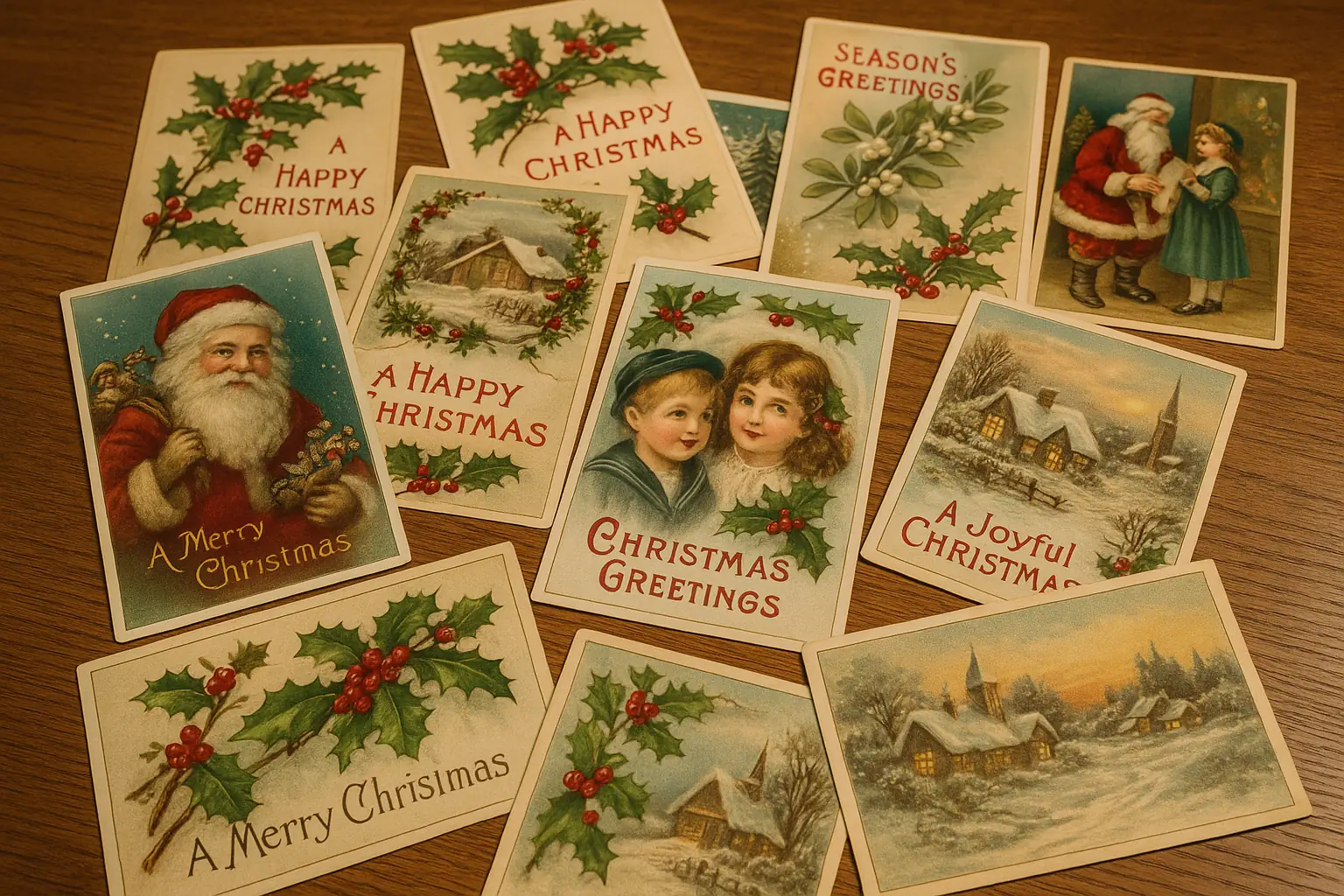
Holiday-themed postcards, especially Christmas and New Year, combine charming design with historical sentiment. Popular UK-specific cards include:
- Edwardian Christmas scenes with snow-covered village churches
- Victorian-style cherubs and robins
- Patriotic wartime holiday cards
- Easter and Halloween postcards (the latter being rarer in UK collections)
Cards from Valentine’s Day, Mothering Sunday, and Empire Day also feature heavily in themed collections.
Comic and Novelty Postcards
Nothing says “British seaside” like a cheeky comic postcard. This genre became hugely popular from the 1930s onwards, often poking fun at marriage, holidays, or British quirks. Key features:
- Bawdy humour: especially on cards by Donald McGill, the “King of Saucy Postcards.”
- Caricatures and cartoons: often exaggerated or slapstick in nature.
- Novelty cards: including mechanical (moving parts), glow-in-the-dark, or 3D lenticular formats.
These cards were hugely popular in places like Skegness, Clacton-on-Sea, and Great Yarmouth, and are still treasured for their bold colours and irreverent humour. 📝 Note: Some earlier comic postcards may now be considered culturally outdated, so collectors should approach with historical context in mind.
Postcards by Famous Artists or Publishers
Some collectors specialise in tracking down works by iconic postcard illustrators and publishers. Notable names include:
- Raphael Tuck & Sons – One of the most prolific UK publishers; known for royal portraits, fine art reproductions, and holiday cards.
- Valentine’s of Dundee – Renowned for real photo postcards and scenic views across the UK.
- Donald McGill – As mentioned, his saucy seaside humour became synonymous with mid-20th century British culture.
- Bamforth & Co. – Yorkshire-based publisher famous for both comic cards and photographic views.
Cards signed by named artists or showing copyright marks are often more valuable, especially if part of a themed series.
📌 Useful UK Collector Resources:
- Raphael Tuck & Sons Archive: A searchable database of Tuck postcards and series info.
- British Postcard Society: Offers guidance for themed collectors and historical context.
- Donald McGill Museum & Archive: Located in Ryde, Isle of Wight, dedicated to the life and works of the artist.
- The Postcard Traders Association – Dealer Directory: Search for UK-based specialists by theme.
How to Date and Identify Vintage Postcards
One of the most rewarding aspects of collecting vintage postcards is uncovering the story behind each piece. Knowing how to date and identify postcards is essential not only for historical interest, but also for understanding value, rarity, and authenticity. Fortunately, there are some key visual and contextual clues that UK collectors can rely on.
1. Postcard Back Design: Divided vs Undivided
The back of a postcard is one of the easiest ways to estimate its age:
Undivided Backs (Pre-1902, UK)
- Early UK postcards issued before 1902 had a plain back.
- Only the address was permitted on the back-messages were written over or around the front image.
- These are known as “undivided backs” and are often highly collectible, especially if unused.
Divided Backs (1902 Onwards, UK)
- The UK became the first country in the world to allow messages on the left-hand side of the back from 1902.
- The card was split into two sections: left for the message, right for the address.
- This change helped spark the Golden Age of postcards, and divided backs remain the standard layout today.
📝 Tip: Cards with undivided backs and Edwardian artwork are strong indicators of pre-1902 production-ideal for antique collectors.
2. Postmarks and Stamps
The postmark date is the most definitive way to date a used postcard. Look for:
- Clear cancellation marks showing the date and location.
- Stamp designs that can be traced to reigns of monarchs:
- Queen Victoria (pre-1901)
- Edward VII (1901–1910)
- George V (1910–1936)
- George VI (1936–1952)
- Elizabeth II (1952–2022)
- Charles III (2022–present, though postcards with his image are still rare)
The style of handwriting, ink type, and address conventions (like “Bournemouth, Hants.” instead of “Dorset”) can also help estimate the date. 📚 For stamp and postmark reference:
- Stanley Gibbons Great Britain Catalogue: The definitive guide for British stamps and postal history.
- The British Postal Museum & Archive: Offers excellent resources and digitised examples of early UK postmarks.
3. Publisher and Photographer Information
Most vintage postcards include a publisher’s name, logo, or series number-usually printed vertically along one side or along the bottom of the image. Some key British publishers to look out for:
- Raphael Tuck & Sons – Used the phrase “Art Publishers to Their Majesties the King and Queen.”
- Valentine’s (Dundee) – Often marked with a “JV” logo or “Valentine Series.”
- Bamforth & Co. – Noted for their comic seaside cards and real photo production.
In the case of real photo postcards (RPPCs), look for photographer credits:
- Sometimes printed in the corner of the image.
- Occasionally handwritten or rubber-stamped on the reverse.
These details not only help to date the card but can also add collector value-especially if the photographer was local or the publisher is well-regarded.
4. Condition Grading Basics
Condition is one of the biggest factors in the value and desirability of a vintage postcard. While standards can vary slightly, here’s a common UK grading system:
| Grade | Description |
| Mint | Unused, sharp corners, no marks or blemishes. Rare for early cards. |
| Excellent | Very slight wear; possibly postmarked but well-preserved. |
| Very Good | Minor corner or edge wear, slight creases or ageing. |
| Good | Noticeable wear, light creasing or postmark bleed-through. |
| Fair | Major creasing, staining, or damage; only of interest for rarity or content. |
Postcards that are unused and have clean backs are generally more valuable-but sometimes, a well-written message or rare postmark can add to the card’s interest, especially for local historians or thematic collectors. 📌 Tip: Always handle postcards with clean, dry hands or use soft cotton gloves to avoid adding oils or stains. Store in acid-free sleeves or albums.
Tools and Resources for UK Collectors:
- Old Postcards – Identifying and Dating UK Cards: Offers useful insights and date estimation tips.
- Picture Postcard Monthly (PPM): Long-running UK magazine with articles on dating, identifying, and valuing cards.
- The Postcard Album – Condition Grading: Detailed grading guide used by UK dealers
- London Postcard Fair: Often hosted at the Royal National Hotel, ideal for collectors in the capital.
- Shepton Mallet Antique & Collectors Fair (Somerset): Offers postcards among a huge variety of vintage items.
Where to Find Vintage Postcards in the UK
One of the joys of collecting vintage postcards is the hunt-uncovering forgotten treasures in the corners of antique shops or stumbling across a rare gem online. Whether you’re a casual collector or a serious enthusiast, the UK offers a wide range of places to buy and explore vintage postcards. Here’s where to start your search.
1. Antique Shops and Flea Markets
Antique shops remain a classic place to browse vintage postcards, especially those in tourist towns or historical market areas. Many keep boxes or albums filled with regionally themed cards, often organised by county or subject. Some recommended places to explore:
- Portobello Road Market (London): A hotspot for ephemera and collectables.
- Camden Passage (Islington, London): Known for antique specialists and small dealers.
- The Lanes in Brighton: A charming spot for postcard hunters near the coast.
- Hemswell Antique Centres (Lincolnshire): One of the largest antique centres in Europe.
Flea markets are great for casual browsing-cards are often sold in bulk or for £1 or less.
2. Postcard Fairs and Collector Events
Postcard fairs are one of the best ways to meet specialist dealers, talk with fellow collectors, and find high-quality or rare cards. These events are held regularly throughout the UK and are listed by region or theme. Notable postcard fairs:
- The Woking Postcard Fair (Surrey): One of the biggest in the UK, featuring over 50 dealers.
- The York National Postcard Fair (held at York Racecourse): A must-visit event, usually twice a year.
- London Postcard Fair: Often hosted at the Royal National Hotel, ideal for collectors in the capital.
- Shepton Mallet Antique & Collectors Fair (Somerset): Offers postcards among a huge variety of vintage items.
👉 Find a full calendar of UK postcard fairs here: Postcard Traders Association – Fairs List
3. Car Boot Sales and Charity Shops
For budget-conscious collectors, car boot sales can be a goldmine. You may find old postcards bundled in boxes or kept in albums by casual sellers who don’t specialise in antiques. It’s hit-and-miss-but sometimes, that’s half the fun. Also check:
- Local British Heart Foundation or Oxfam shops, especially in historic or tourist-heavy towns.
- Church jumble sales and school fairs-especially older institutions may have hidden gems donated by locals.
📝 Tip: Bring small change, and don’t hesitate to ask the seller if they have more cards tucked away.
4. Online Marketplaces (eBay, Etsy, Delcampe)
Buying postcards online offers access to thousands of listings from across the UK and beyond, many searchable by theme, location, or era.
- eBay UK: A go-to for many collectors. Use filters like “used,” “divided back,” or “RPPC” to narrow your search.
- Etsy UK: Great for curated postcard collections or themed bundles.
- Delcampe: A postcard specialist platform used by serious collectors and dealers. Excellent for niche themes and international cards.
Set up alerts for favourite towns, artists, or publishers to catch new listings.
5. Specialist Dealers and Auction Houses
If you’re searching for rare or high-value postcards, it’s worth looking into dealers and auctions:
Reputable UK postcard dealers:
- Barrie J. Smith Postcards: One of the UK’s best-known postcard dealers.
- Old Postcards: Offers a wide range sorted by UK towns, counties, and themes.
- Past Time Postcards: Specialises in UK and worldwide topographical cards.
UK auction houses with postcard lots:
- Spink Auctions (London): Known for postal history and collectables.
- Ewbank’s (Surrey): Regular auctions featuring ephemera, postcards, and photographs.
- Warrington & Northwich Auctioneers: Often include vintage postcard albums in estate sales.
📚 You can also browse postcard dealer directories via the Postcard Traders Association.
Final Tip:
Wherever you choose to buy, always check:
- Card condition (creases, fading, writing)
- Subject matter and rarity
- Postmarks and dates, especially for historical or war-era cards
And most importantly-buy what brings you joy. That’s the true heart of collecting vintage postcards.
How to Store and Care for Your Postcard Collection
Once you’ve started collecting vintage postcards, preserving them becomes just as important as acquiring them. Proper care not only helps maintain their condition and value, but also ensures they can be enjoyed and appreciated for generations to come. Here’s how to store and protect your collection the right way.
1. Proper Storage: Albums, Sleeves, and Acid-Free Boxes
Postcard Albums
Albums are one of the most popular and practical storage options for vintage postcard collectors. They allow you to display cards safely while keeping them organised by theme, location, or era. Look for:
- Albums with acid-free, PVC-free sleeves
- Adjustable pages to accommodate cards of varying thickness
- Side-loading pockets to minimise edge wear
UK suppliers like The Postcard Album and Colnect UK offer purpose-built albums that protect against fading and bending.
Protective Sleeves
For rare or valuable postcards, individual clear polypropylene sleeves provide an added layer of protection-especially if you regularly handle or trade cards. Sleeves are also ideal for cards that won’t be stored in albums or are being temporarily displayed or transported.
Archival Boxes
If you have a large collection or store postcards by the boxful, consider archival-quality postcard boxes. These are:
- Acid- and lignin-free to prevent chemical damage
- Rigid and stackable for long-term preservation
- Often come with dividers for easy sorting
📌 Available from UK conservation suppliers like Secol and Preservation Equipment Ltd.
2. Handling Tips to Avoid Damage
Even a small slip can crease or stain an old postcard, so careful handling is essential.
Best practices include:
- Always wash and dry your hands before handling cards.
- Use cotton gloves for valuable or fragile postcards.
- Hold the card by the edges, not the centre.
- Avoid licking fingers or using moistening agents to flip pages or remove cards.
- If a card is stuck in an album or has been glued down, do not force it-consult a paper conservator for safe removal.
📝 Tip: Invest in a soft brush or air blower to gently remove surface dust without damaging the card.
3. Protecting Postcards from Sunlight, Moisture, and Dust
Environmental factors can significantly degrade the condition of vintage postcards over time. Here’s how to avoid common threats:
Sunlight & UV Light
- Keep cards out of direct sunlight to prevent fading.
- If displaying, use UV-filtering glass or acrylic frames.
- Rotate displayed cards regularly to limit light exposure.
Humidity and Moisture
- Store postcards in a cool, dry environment.
- Avoid attics, basements, or garages where temperatures and humidity fluctuate.
- Aim for a relative humidity of around 40–50% for ideal preservation.
Consider using silica gel packets in storage boxes to absorb excess moisture-these are inexpensive and readily available from craft or photography shops.
Dust and Air Pollutants
- Use airtight containers where possible, especially for long-term storage.
- Avoid displaying postcards near kitchens or open windows.
- Regularly dust your display or storage area with a soft cloth.
Extra Tip for UK Collectors:
If you’re concerned about preserving postcards with high historical or financial value, you might consider consulting a UK-based paper conservator. The Institute of Conservation (ICON) offers a directory of accredited professionals across the UK.
Recommended UK Supplies & Resources:
- Preservation Equipment Ltd – Postcard Storage Products
- The Postcard Album UK
- Secol – Archival Storage Solutions
- ICON – Find a Conservator
Tips for Buying and Selling Vintage Postcards
Whether you’re just getting started or thinking of turning your collection into a part-time income stream, it’s important to understand what makes vintage postcards valuable-and how to avoid common pitfalls. The UK postcard market is vibrant and active, with collectors, dealers, and sellers trading cards both in-person and online.
What Makes a Postcard Valuable?
Not all vintage postcards are created equal. While most can be picked up for under £2, certain characteristics can dramatically increase a card’s value. Here are the key factors to consider when buying or evaluating:
🔎 1. Rarity
- Limited production runs (often by local publishers or photographers)
- Obscure locations, especially lesser-known UK villages or now-demolished buildings
- Unusual themes (e.g. industrial accidents, local protests, suffragette marches)
🔎 2. Subject Matter
- Highly collectible topics include:
- Royal events (jubilees, coronations, royal weddings)
- Seaside resorts (especially from the 1900s–50s)
- Military and war-related scenes (especially WWI RPPCs)
- Comic postcards by artists like Donald McGill
- Vintage transport (trams, steam trains, ocean liners)
🔎 3. Condition
- Mint or excellent condition cards always fetch a premium.
- Even used cards can be valuable if the subject is rare or the message is historically interesting.
- Avoid heavily creased, torn, or water-damaged cards unless the content is exceptionally rare.
📝 Tip: Keep a reference folder of high-value postcard examples in your chosen theme to learn what sells and why.
Red Flags and Common Fakes
While not rampant, forgeries and reproductions do exist in the postcard world-especially online.
🚫 Red flags to watch for:
- Reproduction labels like “Facsimile,” “Reprint,” or blurry print quality (especially on Edwardian-style cards).
- Overly saturated colour or glossy finish on what should be a matt or sepia card.
- Modern fonts or digitally typeset captions claiming to be early 20th century.
🚫 Suspicious seller behaviour:
- Lack of detailed photos (front and back)
- Unclear refund policies
- No reference to condition grading
If in doubt, stick to established sellers or verified members of the Postcard Traders Association (PTA), which sets ethical standards for UK postcard dealers.
Pricing Resources and Guides
Knowing how much to pay-or charge-takes time, but there are reliable tools to help UK collectors gauge value:
📘 Reference Books:
- “Picture Postcard Values” by Brian Lund – Updated annually and covers UK-specific pricing trends.
- “Collecting and Valuing Old Postcards” by David A. Smith – Great for beginners.
📚 Online Resources:
- Delcampe Sold Listings: Shows what postcards have recently sold for.
- eBay UK Sold Listings: Use “Advanced Search” to view sold prices.
- Picture Postcard Monthly (PPM): UK magazine with market insights, fair reports, and dealer features.
📝 Prices vary significantly based on subject matter and audience demand-so always research your niche.
Best Platforms for Selling Postcards Online
Once you’ve built confidence in your collection, you may want to start trading. Here are some top online platforms popular with UK collectors:
🛒 eBay UK
- Huge reach and fast-moving marketplace
- Ideal for bulk lots or themed bundles
- Best for mid-range priced cards (£3–£50)
🛍️ Etsy UK
- Popular for curated, artistic, or thematic postcard sets
- Better suited for decorative cards or repurposing (e.g. for scrapbooking)
🧭 Delcampe
- Specialist site focused on stamps, postcards, and paper ephemera
- More serious collectors-ideal for rare cards and international sales
🧾 Facebook Marketplace / Groups
- Try local history or collector groups like:
- Postcard Collectors UK
- British Topographical Postcards Group
💼 Dealers and Auction Consignment
- For high-value or rare cards, consider selling through a UK dealer or consignment auction.
- Recommended: Barrie J. Smith, Past Time Postcards, or contact PTA-registered dealers.
Whether buying or selling, it pays to:
- Research your niche
- Be honest and transparent in descriptions
- Focus on building trust with fellow collectors
Like all hobbies, collecting vintage postcards is as much about the joy of the find as it is about the monetary value.
Joining the Community: Connect with Other Vintage Postcard Collectors
One of the most rewarding aspects of collecting vintage postcards is becoming part of a wider community of collectors, historians, and enthusiasts. Whether you’re looking to deepen your knowledge, trade cards, or simply share the joy of a great find, the UK offers plenty of ways to get involved-both online and in person.
1. Postcard Clubs and Societies in the UK
Joining a dedicated postcard club or society can help you connect with like-minded collectors, access exclusive resources, and gain expert insight.
🇬🇧 Key UK Postcard Societies:
- Postcard Traders Association (PTA) The UK’s leading trade body for postcard dealers and collectors. They organise postcard fairs, maintain a code of ethics for members, and offer access to an extensive network of experts.
- The British Postcard Society Welcomes both novice and seasoned collectors. Members receive a quarterly magazine filled with research, collecting tips, and news about upcoming events.
- Local Clubs Many UK towns and counties have their own postcard or ephemera groups, such as:
- London Postcard Collectors Club
- Scottish Postcard Society
- Northern Postcard Club (Manchester area)
📝 Most societies offer low-cost annual memberships and welcome new members with talks, trading sessions, and meetups.
2. Online Forums and Facebook Groups
The postcard-collecting world is just as lively online. Social media and forums offer a place to ask questions, get valuations, show off your finds, or discover rare cards from other collectors.
💬 Popular UK-Based Online Communities:
- Facebook Groups:
- Postcard Collectors UK – A vibrant community for all levels of collectors.
- Vintage Postcard Collectors & Dealers (UK & Europe) – Includes dealer listings and trade opportunities.
- British Topographical Postcards Group – Focused on location-based cards.
- Postcrossing Forum While originally designed for modern postcard exchanges, the Postcrossing Forum has active sections for vintage card collectors and postal history.
- Stampboards.com While mainly stamp-focused, this forum has a strong ephemera section including postcard valuation and ID threads, often with UK contributors.
📝 Engaging online is especially helpful for collectors who aren’t near physical fairs or shops.
3. Attending Postcard Fairs and Exhibitions
Attending fairs is not only a great way to build your collection, but also to meet sellers, see rare postcards up close, and connect with other enthusiasts.
📅 Notable UK Postcard Fairs and Events:
- Woking Postcard Fair (Surrey) One of the largest regular postcard events in the UK.
- York National Postcard Fair Held at York Racecourse twice a year, it attracts serious collectors and top dealers.
- London Postcard Fair (Royal National Hotel) Offers everything from comic cards to topographical gems.
- Shepton Mallet Antique & Collectors Fair A broader event that includes significant postcard representation.
For a regularly updated list of UK postcard fairs, visit: PTA Fairs Calendar 📝 Don’t be afraid to ask dealers questions-they’re often happy to share knowledge and point you to cards that match your interests.
Being part of a collecting community can open new doors-whether it’s discovering a rare publisher, learning to spot a valuable postmark, or simply enjoying the company of those who share your passion. Whether online or in person, the UK postcard-collecting scene is welcoming, active, and filled with fascinating characters and stories.
Final Thoughts: Start Your Journey into Collecting Vintage Postcards
Whether you’re driven by personal nostalgia, a fascination with history, or simply a love of beautiful old paper, collecting vintage postcards offers a truly enriching and accessible hobby. It’s a pastime that doesn’t demand a big budget or vast storage space-just curiosity, a keen eye, and a passion for discovery. From Edwardian seaside views to wartime correspondence and cheeky comic cards, vintage postcards capture more than just images. They preserve moments in time, offering glimpses into how people lived, loved, and communicated across generations. Start small-perhaps with postcards from your hometown or a favourite holiday spot-and let your collection grow organically. Visit a local fair, browse a box in a charity shop, or chat with other collectors online. However you begin, you’ll find that the joy lies just as much in the hunt as in the cards themselves. Above all, remember: every postcard tells a story. Some are personal, others historic, and many are humorous or touching. But together, they build a visual archive of the past-one that’s well worth preserving.
Leave a Reply